
Business
Why a Broken Garage Door Spring Is a Problem You Shouldn’t Ignore


A garage door works flawlessly—until it doesn’t. One morning, you press the button, and nothing happens. The door groans, struggles, or simply refuses to budge. More often than not, a broken spring is the culprit. It’s one of the most common garage door problems homeowners face, and it can bring your entire routine to a grinding halt.
Understanding what’s happening inside your garage door system—and knowing when to call in a professional—can save you time, money, and a whole lot of frustration.
What Does a Garage Door Spring Actually Do?
Most people don’t give much thought to their garage door springs—until something goes wrong. These tightly wound metal coils do the heavy lifting, quite literally. A standard garage door can weigh anywhere from 130 to 400 pounds. Without properly functioning springs, the opener motor would burn out trying to lift that weight on its own.
Springs work by storing and releasing mechanical energy. When you close the door, the springs wind up and store tension. When you open it, that tension releases and counterbalances the door’s weight, making it easy to lift. It’s a brilliantly simple system—but it’s also one that takes a beating over time.
The Two Types of Garage Door Springs and How They Fail
There are two main types of springs used in residential garage doors: torsion springs and extension springs.
Torsion Springs
Torsion springs are mounted horizontally above the door opening. They twist and coil around a metal shaft when the door moves. Because of their design, torsion springs tend to last longer and offer smoother, more controlled operation. Most are rated for around 10,000 cycles—roughly seven to nine years of daily use.
Extension Springs
Extension springs run along the horizontal tracks on either side of the door. They stretch and contract as the door moves. While they’re common in older garage door systems and generally less expensive, they tend to wear out faster than torsion springs and can snap with more force when they fail.
Both types will eventually reach the end of their service life. Worn metal, rust, temperature fluctuations, and constant mechanical stress all contribute to spring fatigue. When a spring finally breaks, it often does so suddenly—and loudly.
Warning Signs That a Spring Is About to Fail
Garage door springs rarely give up without a few warning signs first. Keeping an eye (and ear) out for these signals can help you get ahead of a failure before it leaves you stranded.
- The door feels unusually heavy. If lifting the door manually takes noticeably more effort than before, spring tension is likely failing.
- Visible wear or gaps in the spring. A torsion spring with a visible gap in its coils has already snapped. Rusty or stretched extension springs are also red flags.
- Jerky or uneven movement. A door that shakes, jolts, or rises unevenly suggests that one spring is working harder than the other—or has already given out.
- Loud bang from the garage. A snapping spring sounds like a firecracker going off inside the garage. If you hear this, stop using the door immediately.
- The opener runs but the door doesn’t move. The motor may be functioning fine; it’s the springs that are failing to provide the necessary counterbalance.
Acting on these warning signs early prevents costlier damage to the door panels, the opener, and the hardware.
Why DIY Spring Replacement Is Risky
It’s tempting to search for a tutorial and tackle the repair yourself. However, garage door spring replacement is one of those jobs where the risks genuinely outweigh the savings.
Springs under tension store an enormous amount of energy. An improperly handled torsion spring can snap back with enough force to cause serious injury. Professional technicians use specialized winding bars, safety cables, and years of hands-on experience to handle these components safely.
Beyond the safety concern, getting the spring specification wrong—wrong length, diameter, or wire gauge—means the door won’t balance correctly. An unbalanced door strains the opener, wears out hardware faster, and may not seal properly, leaving your home exposed to the elements.
Professional repair isn’t just the safer choice. It’s the smarter long-term investment.
What to Expect From a Professional Spring Repair Service
When you bring in a qualified technician, the process is efficient and thorough. Here’s what a typical service visit looks like:
- Diagnosis: The technician inspects the entire door system—not just the spring—to identify any related issues.
- Spring matching: The replacement spring is matched precisely to your door’s weight and dimensions to ensure proper balance and longevity.
- Safe removal and installation: Old springs are carefully removed, and new ones are installed and tensioned correctly.
- Full system check: The door’s balance, opener performance, cables, and hardware are all tested before the technician leaves.
The result? A door that operates smoothly, quietly, and safely—as if the problem never happened.
Why Timely Repairs Keep Your Garage Door Performing at Its Best
Broken Spring repairs completed promptly by a skilled professional don’t just restore your garage door to working order—they protect the entire system from compounding damage, extend the lifespan of your opener and hardware, and give you the confidence that your door will perform reliably every single time you need it.
Putting off a spring repair, on the other hand, creates a cascade of problems. An unbalanced door puts excess strain on the opener motor, accelerates cable wear, and can cause the door to come down unevenly—potentially damaging the door itself or anything in its path.
At Expert Garage Door Service, spring repairs are handled with precision and care. The team brings the right parts, the right tools, and the expertise to get the job done safely and efficiently—often in a single visit. Whether it’s a snapped torsion spring or a fatigued extension spring, the goal is always the same: restore full function, ensure long-term reliability, and leave you with a garage door that works better than ever.
Frequently Asked Questions
How long do garage door springs typically last?
Most garage door springs are rated for approximately 10,000 cycles. For a household that uses the garage door four times per day, that translates to roughly seven to nine years of service life.
Can I still use my garage door with a broken spring?
It’s strongly advised not to. Operating a door with a broken spring puts excessive strain on the opener motor, risks further damage to the system, and can be unsafe.
Does a broken spring mean I need to replace the entire garage door?
No. In most cases, a spring replacement is all that’s needed to restore full function. A professional technician will assess whether any additional components need attention during the repair visit.
How do I know if I have a torsion or extension spring?
Torsion springs are mounted horizontally above the door opening along a metal shaft. Extension springs run along the tracks on either side of the door. If you’re unsure, a technician can identify your spring type during a service call.
Is it worth upgrading to higher-cycle springs?
For homeowners who use their garage frequently, upgrading to springs rated for 25,000 or even 50,000 cycles is a worthwhile investment. Higher-cycle springs last significantly longer and can reduce the frequency of future repairs.


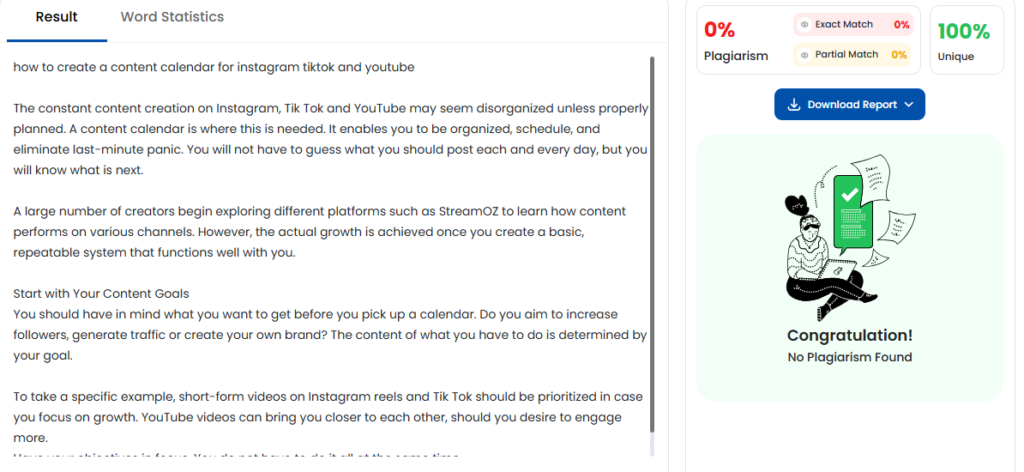
The constant content creation on Instagram, Tik Tok and YouTube may seem disorganized unless properly planned. A content calendar is where this is needed. It enables you to be organized, schedule, and eliminate last-minute panic. You will not have to guess what you should post each and every day, but you will know what is next.
A large number of creators begin exploring different platforms such as StreamOZ to learn how content performs on various channels. However, the actual growth is achieved once you create a basic, repeatable system that functions well with you.
Start with Your Content Goals
You should have in mind what you want to get before you pick up a calendar. Do you aim to increase followers, generate traffic or create your own brand? The content of what you have to do is determined by your goal.
To take a specific example, short-form videos on Instagram reels and Tik Tok should be prioritized in case you focus on growth. YouTube videos can bring you closer to each other, should you desire to engage more.
Have your objectives in focus. You do not have to do it all at the same time.
Choose Your Posting Frequency
It is not about the volume, but consistency. You can choose a schedule you can follow instead of posting every day and getting burned out.
A straightforward beginning would appear like the following:
- Instagram: 3–4 posts per week
- TikTok: 4–5 short videos per week
- YouTube: 1–2 videos per week
You can make changes as you feel free to do depending on the most appropriate.
Plan Content Around Core Ideas
Rather than brainstorming and writing about whoever you want, concentrate on some of the content themes. These are things you will rehearse in other forms.
For example:
- Educational tips
- Behind-the-scenes moments
- Personal stories
- Trends or challenges
A single concept may become a series of works. A YouTube video can be transformed into a few Tik Tok videos and Instagram posts. This is time-saving and will hold your content together.
Map Everything in a Simple Calendar
You need not have anything fancy. A simple weekly or monthly calendar is ideal.
Begin by assigning content on certain days. For example:
Monday: Educational content
Wednesday: Trend or short video.
Friday: Autobiographical or narrative post.
Decision fatigue is eliminated by this structure. You do not have to work with a blank sheet every day.
Leave Room for Flexibility
A content calendar does not need to be like a rulebook. Fashion is so fast-moving, particularly on Tik Tok & Instagram. Create room to pounce on viral concepts or post something unexpectedly.
When nothing is going right, make changes. Your calendar ought to transform alongside your consumer base.
Review and Improve Regularly
You would want to go through what you have covered after each week. Which posts performed well? What got the most engagement?
Take those lessons to plan next week. Your calendar will be more efficient as time goes by.
Final Thoughts
Finally, a content calendar is among the easiest, but the most effective tools to remain consistent on Instagram, TikTok, and YouTube. It also makes you organized, less stressed out and more concentrated on creating rather than planning all the time. When you create your content based on clear goals and themes, you have a more organized and foreseeable growth. Still, flexibility is necessary to be able to adjust to trends and audience behavior. After all, the keys to success of ordinary creators are consistency and intelligent planning.


Social media developers may find it difficult to maintain a regular posting routine and balance their schedules with other tasks. Content batching comes in at that point. Creators can save time, lessen stress, and achieve a consistent stream of posts through concentrated time on producing multiple pieces of content simultaneously. Tools such as YouTubeStorm can be used to monitor performance, but it is planning and organization that really works.
Plan Ahead
The initial stage of content batching is planning. Select the themes, topics or campaigns under which you would like to work within the coming weeks. Create a content plan with a simple plan of what type of content will be shared and at what time.
You need some sort of a plan in order that your seasons of batching are productive and that all the material fits in with your overall strategy.
Dedicate Focused Time
Block out sections of time to write volumes of information. This can be a number of hours, a day or even a weekend. During this period, you have to avoid distractions, and focus solely on producing some videos, posts or graphics.
The benefit of batching is that you are not as stressed to make content on a daily basis, and you can work on something of higher quality since you are not in a hurry to do it.
Group Similar Tasks
When you lump together like tasks, efficiency is enhanced. To illustrate, you can write down all captions simultaneously, make several videos during a period, or work with images in bulk.
Breaking tasks down into groups reduces the mental strain of switching between one kind of work and another and accelerates the process of content creation in general.
Repurpose and Adapt Content
One body of work can be easily tailored to suit several different platforms. An example is a YouTube video that can be divided into small clips to make an Instagram Reel or a TikTok, whereas the most important insights can be transformed into graphics or a blog post.
Repurposing is a way to prolong the life of every piece of content, so that you remain consistent without necessarily producing every piece on your own.
Schedule and Automate
You have something to say, so plan ahead and use scheduling applications. This will ensure that you have your content online even during the period when there is a lot of traffic in the year. It will increase the likelihood of forgetting to post at a moment and will serve to keep your audience entertained.
Review and Improve
Once you post, keep track of the performance of your content. Note down what is most effective in terms of engagement, reach, and shares. Apply these lessons to your subsequent batching sessions and make better content.
Conclusion
Social media creators have a chance to change the game with content batching. Creators can be more consistent, less stressed, and can grow their audience more effectively by planning, dedicating specific time, grouping, repurposing, and planning posts.
When planned out, not only is batching a time-saving practice, but it also means that each piece of content carries a purpose in the development of your brand.

Consistency is considered one of the most neglected yet extremely significant features of the development of social media. Frequent updates will keep your followers engaged, noticeable and educate platforms why your work needs to be more disseminated. Even good contents may be lost in the feed unless they are regular.
In order to maintain their presence and become more involved, numerous creators turn to the services like SocialWick. However, the pillar of expansion is a frequent posting scheme and planning and focus.
Create a Realistic Posting Schedule
The first step to being consistent is to make a schedule that you are sure you will adhere to it. Three reliable postings are more preferable to three large hits and disappear a month later.
Select frequency, based on what you are going to say and how much time you have. Make it as steady as you may–it only fractures your writers and your platform into a prediction of what you are going to tell.
Batch Content Production
Batching content is the best way of being consistent. Schedule some time to write a few posts at once.
The benefit of batching is saving of time, reduced stress, and you will never run out of content even in a hectic day. Themes, series, or recurrent forms can also be batch planned to make the process of batching more efficient.
Repurpose Your Content
Content reusing will ensure that you will remain in the game without necessarily having to reinvent the wheel. A video can be divided into different short fragments or carousals or even snippets of blogs.
This not only saves time, but it also uses different forms and channels to communicate your message to reach the target population that might not be fond of one channel of communication more than the other.
Set Goals and Track Progress
When you know your destination it is less difficult. Engagement, reach and follower measure to know what to do with your audience.
Evaluate your progress once in a week or a month and update your program accordingly. A goal will hold you accountable and it will make you stay in track.
Stay Motivated With Small Wins
Rome was not constructed in a day & make merry of the small achievements. Positive feedback can motivate you or a spike in engagement, or you may be motivated by a posting milestone.
Being consistent is not identical to being perfect, just turn up. Even minor changes that are gradual can become significant over a period.
Engage With Your Audience
The consistency is not only related to posting. Responses to postings, use of your followers in discussions and interacting with them will keep you in the limelight and help stimulate action in your followers.
It also enables you to know in what read among your readers and makes it better and smarter to think about what you have in mind.
Conclusion
A broad content production is a powerful growth engine. Being realistic in the posting schedule, batching, repurposing post, tracking your performance, and communicating with your audience can all help keep you active without experiencing burnout.

how to create a content calendar for instagram tiktok and youtube

Content Batching Strategies for Social Media Creators

Content Creation Consistency How to Stay Active and Grow Faster

How to Choose a Trusted UK Peptide Supplier for Research Purposes

How Can Students or Authors Streamline Their Publications Legally?

Who Is Indiana Urban? Inside the Life of Karl Urban’s Son and Rising Actor

Jennifer Seyfried: All About Amanda Seyfried’s Sister, Her Life and Career

Who Is Zachary Hudson? Inside the Private Life of Cindy Williams’ Son

Cynthia Womack Biography: The Life, Career, and Legacy of Connie Britton’s Twin Sister

Who Is Stephen G. Walker? All About PinkPantheress’ Father and His Academic Career
Who Is Indiana Urban? Inside the Life of Karl Urban’s Son and Rising Actor
Jennifer Seyfried: All About Amanda Seyfried’s Sister, Her Life and Career
Who Is Zachary Hudson? Inside the Private Life of Cindy Williams’ Son
Cynthia Womack Biography: The Life, Career, and Legacy of Connie Britton’s Twin Sister
Who Is Stephen G. Walker? All About PinkPantheress’ Father and His Academic Career
-
Biography4 months ago
Who Is Indiana Urban? Inside the Life of Karl Urban’s Son and Rising Actor
-
Biography4 months ago
Jennifer Seyfried: All About Amanda Seyfried’s Sister, Her Life and Career
-
Biography4 months ago
Who Is Zachary Hudson? Inside the Private Life of Cindy Williams’ Son
-
Biography4 months ago
Cynthia Womack Biography: The Life, Career, and Legacy of Connie Britton’s Twin Sister
-
 Biography3 months ago
Who Is Stephen G. Walker? All About PinkPantheress’ Father and His Academic Career
-
 Biography4 months ago
Who Was Gretchen Knauff? The Private Life of Jennifer Coolidge’s Mother
-
 Biography4 months ago
Who Is Miley Crews? Inside the Life of Naomi Burton-Crews’ Daughter and Terry Crews’ Granddaughter
-
 Biography3 months ago
Who is Lynn Levesque? Everything to Know About Triple H’s Sister