
Business
What Your Well Water Is Hiding—And How to Fix It


Hard water stains on your faucets. A faint sulfur smell when you turn on the tap. A strange metallic aftertaste that lingers long after your morning glass of water. These aren’t just minor inconveniences—they’re signs that your well water may be working against you.
Millions of American households depend on private wells for their daily water supply. Unlike municipal water, well water doesn’t go through a centralized treatment facility before it reaches your home. That means whatever is in the ground around your well—iron, manganese, bacteria, nitrates, sediment—could be flowing straight to your faucets. For many homeowners, the full picture of what’s in their water doesn’t become clear until problems start showing up in unexpected places.
That’s exactly where professional well water filtration comes in. Raleigh Water Pros has spent years helping homeowners in the Raleigh area take control of their water quality, and the results speak for themselves.
What Makes Well Water Different From City Water?
Municipal water supplies are regulated by the Environmental Protection Agency (EPA) and must meet strict federal standards before reaching homes. Private wells, however, fall outside that regulatory umbrella. The responsibility for testing, treating, and maintaining well water quality rests entirely with the homeowner.
This isn’t necessarily cause for alarm. Plenty of homes with private wells enjoy clean, safe water year-round. But without regular testing and proper filtration, problems can develop gradually and go undetected for months—or even years.
Common Contaminants Found in Well Water
Well water quality varies widely depending on geographic location, soil composition, and nearby land use. Some of the most frequently encountered contaminants include:
- Iron and manganese: These naturally occurring minerals leave rust-colored stains on sinks, toilets, and laundry. High concentrations also affect taste and odor.
- Hardness minerals (calcium and magnesium): Hard water reduces soap lathering, leaves scale buildup on pipes and appliances, and shortens the lifespan of water heaters and dishwashers.
- Hydrogen sulfide: Responsible for the “rotten egg” smell that some well water users notice, especially when running hot water.
- Bacteria and coliform: Shallow wells or wells near agricultural areas are particularly vulnerable to bacterial contamination, which poses real health risks.
- Nitrates: Often linked to fertilizer runoff, high nitrate levels are especially dangerous for infants and pregnant women.
- Sediment and turbidity: Dirt, sand, and particulate matter that clouds the water and wears down plumbing fixtures over time.
Identifying which of these contaminants is present—and in what concentrations—requires professional water testing. That’s the first step Raleigh Water Pros takes before recommending any treatment solution.
The Real Cost of Untreated Well Water
It’s easy to underestimate what untreated well water costs over time. The damage shows up slowly, in ways that aren’t always obviously connected to water quality.
Appliances like water heaters, dishwashers, and washing machines age faster when exposed to hard water and high iron content. Scale buildup inside pipes gradually reduces water pressure and increases the risk of plumbing failures. Clothes washed in iron-rich water develop a dingy, yellowish tint over time. Skin and hair can feel dry or dull after consistent exposure to hard water.
Then there are the health considerations. While not all well water contaminants are dangerous, some—like bacteria, nitrates, and certain heavy metals—carry genuine risks with prolonged exposure. The peace of mind that comes with knowing your water is clean and safe has real value, especially for families with young children or elderly members.
Addressing these issues proactively costs significantly less than dealing with the downstream consequences of poor water quality.
How Raleigh Water Pros Approaches Well Water Filtration
No two wells are exactly alike. Water chemistry varies from one property to the next, which means effective filtration requires a customized approach—not a one-size-fits-all solution pulled off a shelf.
Raleigh Water Pros begins every project with a comprehensive water test. This analysis identifies the specific contaminants present in your water and establishes baseline readings for key parameters like pH, hardness, iron content, and bacterial presence. From there, the team designs a filtration system tailored to your water’s exact profile.
Depending on what the testing reveals, a complete solution might include:
- Sediment pre-filters to remove particulate matter before it reaches other components
- Iron and manganese filters to eliminate staining and metallic taste
- Water softeners to address hardness and protect pipes and appliances
- Carbon filters to neutralize chlorine, hydrogen sulfide, and organic compounds affecting taste and odor
- UV purification systems to neutralize bacteria and other biological contaminants without adding chemicals
- Reverse osmosis systems for drinking water that needs an additional layer of purification
Each system is professionally installed and configured to match the flow rate, pressure, and usage demands of your specific home. Raleigh Water Pros handles everything from initial testing to installation and ongoing maintenance, so you don’t have to piece together a solution on your own.
What Life Looks Like With Clean Well Water
The difference that professional filtration makes isn’t subtle. Homeowners who’ve had their systems installed consistently describe the change as immediate and noticeable.
Glasses come out of the dishwasher without spots. The sulfur smell disappears. Water heaters and appliances run more efficiently. Laundry looks brighter. And perhaps most meaningfully, there’s no longer any doubt about whether the water coming out of the tap is safe to drink.
For families who’ve been buying bottled water as a workaround, a properly filtered well system often eliminates that expense entirely—adding up to meaningful savings over the course of a year.
Why Raleigh Water Pros Is the Right Partner for This Job
A professionally installed well water filtration system does more than just improve the taste and clarity of your water—it actively protects your home’s plumbing infrastructure, extends the life of your appliances, reduces long-term maintenance costs, and delivers water that’s consistently safe for every member of your household, from the kitchen tap to the shower to the garden hose. That’s the full scope of what Raleigh Water Pros delivers with every installation.
The team brings hands-on experience with the specific water quality challenges common to the Raleigh area. Local geology, seasonal changes, and regional land use patterns all affect well water chemistry in ways that generalist advice can’t account for. Raleigh Water Pros understands the local landscape and applies that knowledge to every project.
Beyond technical expertise, the approach is refreshingly straightforward. You get honest recommendations based on your actual water test results—not an upsell. The goal is to solve your water quality problem effectively and efficiently, with a system that performs reliably for years to come.
Take the First Step Toward Better Water Today
Your well is a valuable resource. With the right filtration system in place, it can deliver clean, great-tasting water every day—without staining your fixtures, damaging your appliances, or raising any health concerns.
Raleigh Water Pros makes the process simple. From water testing to full system installation, every step is handled by experienced professionals who care about getting it right. If you’ve been noticing issues with your well water—or simply want the confidence that comes with knowing your water has been properly tested and treated—now is the perfect time to reach out.
Contact Raleigh Water Pros today and find out what your well water is really made of.


The constant content creation on Instagram, Tik Tok and YouTube may seem disorganized unless properly planned. A content calendar is where this is needed. It enables you to be organized, schedule, and eliminate last-minute panic. You will not have to guess what you should post each and every day, but you will know what is next.
A large number of creators begin exploring different platforms such as StreamOZ to learn how content performs on various channels. However, the actual growth is achieved once you create a basic, repeatable system that functions well with you.
Start with Your Content Goals
You should have in mind what you want to get before you pick up a calendar. Do you aim to increase followers, generate traffic or create your own brand? The content of what you have to do is determined by your goal.
To take a specific example, short-form videos on Instagram reels and Tik Tok should be prioritized in case you focus on growth. YouTube videos can bring you closer to each other, should you desire to engage more.
Have your objectives in focus. You do not have to do it all at the same time.
Choose Your Posting Frequency
It is not about the volume, but consistency. You can choose a schedule you can follow instead of posting every day and getting burned out.
A straightforward beginning would appear like the following:
- Instagram: 3–4 posts per week
- TikTok: 4–5 short videos per week
- YouTube: 1–2 videos per week
You can make changes as you feel free to do depending on the most appropriate.
Plan Content Around Core Ideas
Rather than brainstorming and writing about whoever you want, concentrate on some of the content themes. These are things you will rehearse in other forms.
For example:
- Educational tips
- Behind-the-scenes moments
- Personal stories
- Trends or challenges
A single concept may become a series of works. A YouTube video can be transformed into a few Tik Tok videos and Instagram posts. This is time-saving and will hold your content together.
Map Everything in a Simple Calendar
You need not have anything fancy. A simple weekly or monthly calendar is ideal.
Begin by assigning content on certain days. For example:
Monday: Educational content
Wednesday: Trend or short video.
Friday: Autobiographical or narrative post.
Decision fatigue is eliminated by this structure. You do not have to work with a blank sheet every day.
Leave Room for Flexibility
A content calendar does not need to be like a rulebook. Fashion is so fast-moving, particularly on Tik Tok & Instagram. Create room to pounce on viral concepts or post something unexpectedly.
When nothing is going right, make changes. Your calendar ought to transform alongside your consumer base.
Review and Improve Regularly
You would want to go through what you have covered after each week. Which posts performed well? What got the most engagement?
Take those lessons to plan next week. Your calendar will be more efficient as time goes by.
Final Thoughts
Finally, a content calendar is among the easiest, but the most effective tools to remain consistent on Instagram, TikTok, and YouTube. It also makes you organized, less stressed out and more concentrated on creating rather than planning all the time. When you create your content based on clear goals and themes, you have a more organized and foreseeable growth. Still, flexibility is necessary to be able to adjust to trends and audience behavior. After all, the keys to success of ordinary creators are consistency and intelligent planning.

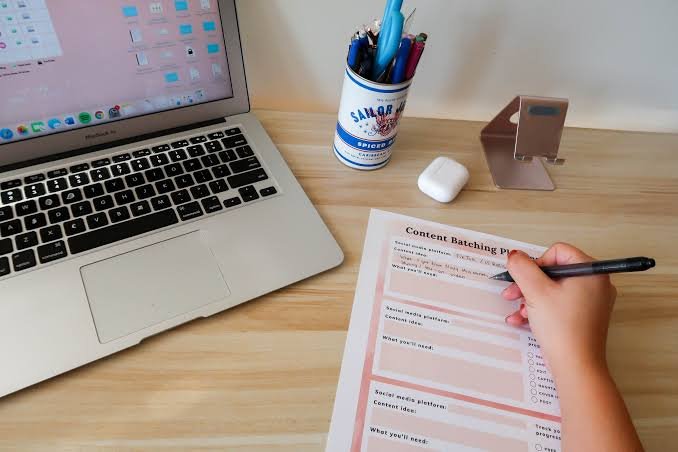
Social media developers may find it difficult to maintain a regular posting routine and balance their schedules with other tasks. Content batching comes in at that point. Creators can save time, lessen stress, and achieve a consistent stream of posts through concentrated time on producing multiple pieces of content simultaneously. Tools such as YouTubeStorm can be used to monitor performance, but it is planning and organization that really works.
Plan Ahead
The initial stage of content batching is planning. Select the themes, topics or campaigns under which you would like to work within the coming weeks. Create a content plan with a simple plan of what type of content will be shared and at what time.
You need some sort of a plan in order that your seasons of batching are productive and that all the material fits in with your overall strategy.
Dedicate Focused Time
Block out sections of time to write volumes of information. This can be a number of hours, a day or even a weekend. During this period, you have to avoid distractions, and focus solely on producing some videos, posts or graphics.
The benefit of batching is that you are not as stressed to make content on a daily basis, and you can work on something of higher quality since you are not in a hurry to do it.
Group Similar Tasks
When you lump together like tasks, efficiency is enhanced. To illustrate, you can write down all captions simultaneously, make several videos during a period, or work with images in bulk.
Breaking tasks down into groups reduces the mental strain of switching between one kind of work and another and accelerates the process of content creation in general.
Repurpose and Adapt Content
One body of work can be easily tailored to suit several different platforms. An example is a YouTube video that can be divided into small clips to make an Instagram Reel or a TikTok, whereas the most important insights can be transformed into graphics or a blog post.
Repurposing is a way to prolong the life of every piece of content, so that you remain consistent without necessarily producing every piece on your own.
Schedule and Automate
You have something to say, so plan ahead and use scheduling applications. This will ensure that you have your content online even during the period when there is a lot of traffic in the year. It will increase the likelihood of forgetting to post at a moment and will serve to keep your audience entertained.
Review and Improve
Once you post, keep track of the performance of your content. Note down what is most effective in terms of engagement, reach, and shares. Apply these lessons to your subsequent batching sessions and make better content.
Conclusion
Social media creators have a chance to change the game with content batching. Creators can be more consistent, less stressed, and can grow their audience more effectively by planning, dedicating specific time, grouping, repurposing, and planning posts.
When planned out, not only is batching a time-saving practice, but it also means that each piece of content carries a purpose in the development of your brand.

Consistency is considered one of the most neglected yet extremely significant features of the development of social media. Frequent updates will keep your followers engaged, noticeable and educate platforms why your work needs to be more disseminated. Even good contents may be lost in the feed unless they are regular.
In order to maintain their presence and become more involved, numerous creators turn to the services like SocialWick. However, the pillar of expansion is a frequent posting scheme and planning and focus.
Create a Realistic Posting Schedule
The first step to being consistent is to make a schedule that you are sure you will adhere to it. Three reliable postings are more preferable to three large hits and disappear a month later.
Select frequency, based on what you are going to say and how much time you have. Make it as steady as you may–it only fractures your writers and your platform into a prediction of what you are going to tell.
Batch Content Production
Batching content is the best way of being consistent. Schedule some time to write a few posts at once.
The benefit of batching is saving of time, reduced stress, and you will never run out of content even in a hectic day. Themes, series, or recurrent forms can also be batch planned to make the process of batching more efficient.
Repurpose Your Content
Content reusing will ensure that you will remain in the game without necessarily having to reinvent the wheel. A video can be divided into different short fragments or carousals or even snippets of blogs.
This not only saves time, but it also uses different forms and channels to communicate your message to reach the target population that might not be fond of one channel of communication more than the other.
Set Goals and Track Progress
When you know your destination it is less difficult. Engagement, reach and follower measure to know what to do with your audience.
Evaluate your progress once in a week or a month and update your program accordingly. A goal will hold you accountable and it will make you stay in track.
Stay Motivated With Small Wins
Rome was not constructed in a day & make merry of the small achievements. Positive feedback can motivate you or a spike in engagement, or you may be motivated by a posting milestone.
Being consistent is not identical to being perfect, just turn up. Even minor changes that are gradual can become significant over a period.
Engage With Your Audience
The consistency is not only related to posting. Responses to postings, use of your followers in discussions and interacting with them will keep you in the limelight and help stimulate action in your followers.
It also enables you to know in what read among your readers and makes it better and smarter to think about what you have in mind.
Conclusion
A broad content production is a powerful growth engine. Being realistic in the posting schedule, batching, repurposing post, tracking your performance, and communicating with your audience can all help keep you active without experiencing burnout.

how to create a content calendar for instagram tiktok and youtube

Content Batching Strategies for Social Media Creators

Content Creation Consistency How to Stay Active and Grow Faster

How to Choose a Trusted UK Peptide Supplier for Research Purposes

How Can Students or Authors Streamline Their Publications Legally?

Who Is Indiana Urban? Inside the Life of Karl Urban’s Son and Rising Actor

Jennifer Seyfried: All About Amanda Seyfried’s Sister, Her Life and Career

Who Is Zachary Hudson? Inside the Private Life of Cindy Williams’ Son

Cynthia Womack Biography: The Life, Career, and Legacy of Connie Britton’s Twin Sister

Who Is Stephen G. Walker? All About PinkPantheress’ Father and His Academic Career
Who Is Indiana Urban? Inside the Life of Karl Urban’s Son and Rising Actor
Jennifer Seyfried: All About Amanda Seyfried’s Sister, Her Life and Career
Who Is Zachary Hudson? Inside the Private Life of Cindy Williams’ Son
Cynthia Womack Biography: The Life, Career, and Legacy of Connie Britton’s Twin Sister
Who Is Stephen G. Walker? All About PinkPantheress’ Father and His Academic Career
-
Biography4 months ago
Who Is Indiana Urban? Inside the Life of Karl Urban’s Son and Rising Actor
-
Biography4 months ago
Jennifer Seyfried: All About Amanda Seyfried’s Sister, Her Life and Career
-
Biography4 months ago
Who Is Zachary Hudson? Inside the Private Life of Cindy Williams’ Son
-
Biography4 months ago
Cynthia Womack Biography: The Life, Career, and Legacy of Connie Britton’s Twin Sister
-
 Biography3 months ago
Who Is Stephen G. Walker? All About PinkPantheress’ Father and His Academic Career
-
 Biography4 months ago
Who Was Gretchen Knauff? The Private Life of Jennifer Coolidge’s Mother
-
 Biography4 months ago
Who Is Miley Crews? Inside the Life of Naomi Burton-Crews’ Daughter and Terry Crews’ Granddaughter
-
 Biography3 months ago
Who is Lynn Levesque? Everything to Know About Triple H’s Sister