
Business
ASC 842 Compliance in 2025: Why Your Lease Management System Is the First Line of Defense


When ASC 842 was first introduced by the Financial Accounting Standards Board, the compliance window felt distant enough for many organizations to delay a meaningful response. That window has largely closed. By 2025, most public and private companies operating under U.S. GAAP have passed through their initial adoption periods, yet audit findings, restatements, and internal control deficiencies related to lease accounting continue to surface at a steady rate. The standard did not simplify with familiarity. If anything, ongoing compliance has proven more demanding than the initial transition for organizations that underestimated the operational discipline required to sustain it.
The core challenge is not the accounting rules themselves. Most finance teams understand the mechanics of right-of-use assets and lease liabilities well enough. The deeper problem is data — specifically, the volume, variability, and movement of lease data across a portfolio that rarely holds still. Leases get amended. Terms get extended informally before formal documentation follows. Subleases get added. Equipment rentals that crossed the threshold into capitalized treatment get overlooked. These are not exotic scenarios. They are routine conditions in organizations that manage more than a handful of lease agreements.
What separates companies that sustain clean audit outcomes from those that repeatedly encounter compliance gaps is not their accounting knowledge. It is the quality of the infrastructure they use to manage lease data, obligations, and changes in real time.
What a Lease Management System Actually Controls
The term “lease management” describes a broader operational function than most people initially assume. It is not simply the act of storing lease documents or tracking payment due dates. Effective lease management covers the full lifecycle of each agreement — from initial classification and measurement through modifications, renewals, early terminations, and eventual expiration. Under ASC 842, every one of those lifecycle events carries accounting consequences that must be captured accurately and on time.
A well-configured lease management system acts as the operational backbone for this process. It structures the data environment in a way that makes ASC 842 compliance a product of normal workflow rather than a separate audit-preparation exercise. When lease data lives in a dedicated system with proper controls, the accounting team is not reconstructing facts from scattered files and email chains before each reporting period. The facts are already organized, versioned, and traceable.
The Connection Between Lease Data Integrity and Audit Readiness
Audit readiness under ASC 842 depends on one thing more than any other: the ability to substantiate every figure on the balance sheet with a clear, documented trail back to the lease terms that produced it. This sounds straightforward, but it requires that lease data remain accurate not just at the point of initial entry but through every change event that follows over the life of the agreement.
Organizations that manage lease portfolios through spreadsheets or general-purpose document repositories face a structural problem here. When a lease is amended — a common occurrence in commercial real estate and equipment agreements — the revised terms must be reflected in new calculations for the lease liability and right-of-use asset. If those updates are made manually and inconsistently, the balance sheet figures drift away from the underlying agreements. By the time an audit begins, the effort required to reconcile what happened becomes substantial, and the risk of undetected errors increases proportionally.
Modification Events Are Where Most Compliance Failures Begin
ASC 842 treats lease modifications with particular care because modifications can change how an agreement is classified and measured. A modification that grants additional right-of-use assets at a commensurate increase in consideration is treated as a separate new lease. A modification that does not meet that criteria requires remeasurement of the existing lease liability using a revised discount rate. These are not interchangeable treatments, and applying the wrong one produces materially incorrect financial statements.
In practice, lease modifications happen frequently and sometimes informally. A landlord agrees to extend occupancy by three months while final renewal paperwork is prepared. A fleet vendor adjusts the included mileage on a vehicle lease without issuing a formal amendment immediately. An equipment agreement gets renegotiated mid-term as part of a broader vendor relationship discussion. Each of these events creates a point of accounting risk if there is no system in place to flag the event, prompt review, and enforce proper documentation before the next close cycle.
Discount Rates, Incremental Borrowing Rates, and Ongoing Accuracy
One of the more technically demanding elements of ASC 842 is the requirement to determine an appropriate discount rate for each lease liability at inception and, in many cases, at remeasurement. For most companies that cannot readily determine the rate implicit in the lease, the standard requires using the incremental borrowing rate — the rate the lessee would pay to borrow funds of a similar amount, term, and collateral profile.
This is not a one-time calculation. Each new lease, each modification that triggers remeasurement, and each renewal option that becomes reasonably certain to be exercised potentially requires a fresh rate determination. Over a large or active portfolio, the administrative burden of maintaining rate accuracy is significant. Companies that do not track this systematically often discover during audits that rates were applied inconsistently or that remeasurement events were missed entirely.
Practical Lease Classification Discipline
Classification under ASC 842 — whether a lease is treated as an operating lease or a finance lease — determines how costs are recognized in the income statement and how the asset and liability are presented on the balance sheet. The classification criteria are set at commencement and generally do not change unless a modification event occurs that effectively creates a new lease.
The practical implication is that classification discipline must be embedded into the lease intake process, not applied retroactively. Organizations that establish a structured review workflow at the time of lease commencement — examining term relative to asset useful life, present value of payments relative to fair value of the asset, and the presence of purchase options or specialized nature provisions — are far less likely to encounter reclassification issues later. This kind of intake discipline is difficult to maintain through manual processes when lease volume is high.
The Scope Problem: Embedded Leases and Service Agreements
ASC 842 applies not only to traditional real estate and equipment leases but to any contract that contains a lease component — meaning any arrangement that conveys the right to control the use of an identified asset for a period of time in exchange for consideration. This definition captures a meaningful portion of contracts that companies do not initially think of as leases.
Embedded leases within broader service agreements are a persistent source of compliance gaps. A logistics services contract that dedicates specific vehicles to a customer’s operations may contain a lease of those vehicles. A manufacturing services agreement that allocates use of specific production equipment may similarly contain a lease component. FASB’s guidance under ASU 2016-02 requires companies to assess contracts at inception and reassess when terms change, which demands a systematic approach to contract review that goes well beyond the finance team’s traditional scope.
Building a Repeatable Contract Review Process
The challenge of identifying embedded leases is not primarily a legal or accounting question — it is a process question. It requires consistent communication between procurement, legal, operations, and finance so that contracts reach the appropriate review point before they are executed and before the lease commencement date passes unnoticed.
Companies that have reduced their embedded lease exposure tend to share a few common characteristics. They have defined a clear threshold for when contract review is required. They have established a cross-functional intake process with assigned responsibilities. And they have a central record of reviewed contracts with documented conclusions, so that the same analysis is not being reconstructed from scratch each time a similar agreement renews or is renegotiated.
Disclosure Requirements and the Ongoing Reporting Burden
ASC 842 carries significant disclosure requirements beyond the balance sheet figures themselves. Companies are required to provide qualitative and quantitative information about lease arrangements, including the nature of leases, significant assumptions and judgments, maturity analyses of lease liabilities, and information about variable lease costs and sublease income.
Producing these disclosures accurately and efficiently at each reporting period requires access to well-organized, current data across the entire lease portfolio. This is not a problem that can be solved by working harder at period-end. It is a problem solved by maintaining data quality continuously throughout the period, so that when the close cycle begins, the information required for disclosures is already available in a reliable, reportable form.
The Real Cost of Disclosure Errors
Disclosure deficiencies under ASC 842 carry risks that extend beyond technical audit findings. Investors and analysts use lease disclosure information to assess off-balance-sheet commitments, operational flexibility, and capital structure. Inaccurate or incomplete disclosures can affect how analysts model a company’s financial position, particularly when lease obligations represent a meaningful portion of total liabilities. For companies subject to debt covenants or credit facility conditions that reference lease-adjusted metrics, disclosure accuracy has direct financial consequences.
Closing Observations
ASC 842 compliance in 2025 is not primarily an accounting challenge. The accounting framework is well established and broadly understood. What sustains compliance — or erodes it — over time is the quality of the operational infrastructure that surrounds lease data, modification events, classification decisions, and disclosure preparation.
Organizations that continue to rely on manual processes and fragmented records face a compounding risk. Each reporting period adds new modification events, new leases, and new potential gaps. The further those gaps extend before they are identified, the more disruptive the correction becomes. The companies that consistently pass through audit cycles with clean lease accounting outcomes are not the ones with the most sophisticated accounting teams. They are the ones that treated the data infrastructure question seriously from the beginning and maintained it with discipline through the ongoing demands of a standard that does not allow for casual administration.
A structured, systematic approach to lease data management is not a luxury for large enterprises. It is the baseline requirement for any organization with a portfolio complex enough to produce material lease liabilities — and for most companies operating under ASC 842, that description applies directly.

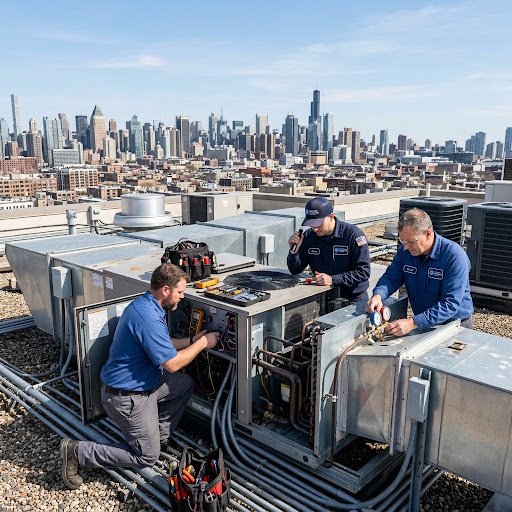
There’s a moment every homeowner dreads—the dead of summer, the air conditioner gives out, and the house turns into a furnace before noon. Or the opposite: a bitter winter night, the heater stops working, and no amount of blankets makes a dent. These aren’t just inconveniences. They’re disruptions to daily life that demand fast, reliable action from a team that knows exactly what it’s doing.
That’s where Complete Temperature Services steps in. With a proven track record of delivering top-tier heating and cooling solutions, this company has built a reputation on one simple promise: keeping your home comfortable, no matter the season.
What Sets Complete Temperature Services Apart from the Rest?
The HVAC industry is crowded. There’s no shortage of companies willing to show up, take a look, and hand over a quote. But there’s a significant gap between a company that completes a job and one that completes it well.
Complete Temperature Services falls firmly in the second category. Their team doesn’t treat every service call as a transaction—they treat it as an opportunity to solve a real problem for a real family. That customer-first mindset shapes everything from the first phone call to the final system check.
Here’s what that looks like in practice:
- Transparent pricing: No surprise charges, no fine print. Customers know what they’re paying before the work begins.
- Skilled technicians: Every member of the team brings hands-on expertise across a wide range of heating and cooling systems.
- Timely service: When your comfort is on the line, waiting days for a technician isn’t acceptable. Complete Temperature Services prioritizes fast scheduling and prompt arrivals.
- Lasting results: Quick fixes that fail in two months aren’t solutions. The team focuses on repairs and installations designed to hold up over time.
The Full Scope of HVAC Services They Offer
Complete Temperature Services handles the full spectrum of residential and commercial HVAC needs. This isn’t a company that specializes in one narrow area and refers everything else elsewhere. Customers come to them knowing that whatever the issue, there’s a qualified professional ready to address it.
Heating Solutions That Keep the Cold Out
From furnace installations to heat pump repairs, the heating services at Complete Temperature Services cover every scenario a homeowner might face. When temperatures drop, the last thing anyone wants is a delayed response or an inexperienced technician guessing at the problem. Their team diagnoses accurately, repairs efficiently, and installs with precision—so the warmth stays in and the cold stays out.
Cooling Systems Built for the Long Haul
A cooling system is one of the most important investments a homeowner makes. A poorly installed or neglected air conditioner doesn’t just underperform—it drives up energy bills and shortens its own lifespan. Complete Temperature Services approaches every AC installation and repair with the long game in mind. Proper sizing, correct refrigerant levels, efficient airflow—these details matter, and the team doesn’t cut corners on any of them.
Maintenance That Prevents Costly Surprises
Routine maintenance is the unsung hero of home comfort. Most major HVAC failures don’t happen overnight. They build up slowly through dirty filters, worn components, and small inefficiencies that compound over time. Complete Temperature Services offers preventative maintenance programs that catch these issues early—saving homeowners from emergency repair bills and uncomfortable breakdowns at the worst possible moments.
Why Homeowners Keep Coming Back
Repeat business and word-of-mouth referrals are the clearest indicators of a company’s quality. Complete Temperature Services has earned both. Homeowners return not just because the work gets done, but because of how the experience feels—professional, straightforward, and genuinely focused on their needs.
There’s also something to be said for working with a company that understands the local climate. Temperature fluctuations, humidity levels, and seasonal patterns all affect how an HVAC system performs. A team embedded in the community brings that contextual knowledge to every job, recommending systems and maintenance schedules that actually align with local conditions.
The Right Time to Call Is Before There’s a Crisis
Most people wait until something breaks to think about their HVAC system. That’s understandable—out of sight, out of mind. But the most cost-effective approach is proactive, not reactive.
An experienced HVAC Contractor can evaluate your entire heating and cooling system, identify components that are approaching the end of their lifespan, and recommend targeted upgrades that improve efficiency and prevent unexpected failures before they disrupt your home or your budget.
Complete Temperature Services makes it easy to stay ahead of these issues. Whether it’s scheduling a seasonal tune-up, asking about a system upgrade, or getting a second opinion on an existing diagnosis, their team is available and approachable.
Waiting until the hottest day of the year or the coldest night of the winter to make that call will always cost more—in time, money, and comfort—than reaching out before a problem becomes a crisis.
Comfort Is Not a Luxury—It’s a Standard
Home comfort shouldn’t be something you fight for or worry about. It should be a baseline expectation, delivered consistently by a team you can trust. Complete Temperature Services has built its entire operation around that idea.
From the first service call to long-term system maintenance, the company brings the expertise, reliability, and customer care that homeowners deserve. The season doesn’t matter. The system type doesn’t matter. What matters is that the job gets done right—and that when you need help again, you already know who to call.
Reach out to Complete Temperature Services today and find out what dependable, professional HVAC service actually feels like.

Your home’s exterior takes a beating every single season. Rain, wind, algae, moss, debris—they quietly pile up, dulling what was once a sharp-looking property. Most homeowners don’t notice the decline until it’s already gone too far. That’s where professional exterior cleaning steps in—and Clean425 delivers results that genuinely speak for themselves.
What Dirty Exteriors Are Actually Costing You
The grime you see on your roof or driveway isn’t just an eyesore. Left untreated, algae and moss work their way beneath shingles, trapping moisture that accelerates deterioration. Clogged gutters redirect water toward your foundation, increasing the risk of costly structural damage over time. Even dirty driveways and siding reduce your property’s perceived value—something that matters whether you’re selling or simply taking pride in your home.
Professional exterior cleaning solves all of this efficiently, without the risks that come with DIY attempts on ladders or with pressure settings that can crack surfaces or strip protective coatings.
Why Roof Cleaning Deserves More Attention
Most homeowners prioritize interior upkeep—fresh paint, updated fixtures, clean floors. The roof? It gets overlooked until there’s a leak or an inspector flags a problem.
Black streaks running down roof shingles are caused by Gloeocapsa magma, a type of cyanobacteria that feeds on the limestone filler in asphalt shingles. Over time, this compromises the shingle’s UV protection, shortening the lifespan of your roof significantly. Regular soft-wash roof cleaning removes these organisms without damaging the shingles—extending roof life and preserving your investment.
Clean roofs also reflect heat more efficiently, which can contribute to lower cooling costs during warmer months. It’s one of those maintenance tasks that pays you back in more ways than one.
Gutter Cleaning: Small Task, Big Consequences
Gutters are designed to channel water safely away from your home. When they’re blocked with leaves, twigs, and sediment, that system fails—and the consequences range from overflowing water pooling near your foundation to rotting fascia boards and pest infestations.
The frustrating part is that clogged gutters rarely signal distress until there’s already a problem. A professional cleaning clears out debris completely, checks for proper drainage, and flags any early signs of damage before they become expensive repairs. It’s a straightforward service that protects some of the most critical parts of your home’s structure.
Gutters should typically be cleaned at least twice a year—once in late spring and once after autumn leaf fall. Properties surrounded by trees may need more frequent attention.
Power Washing: Transforming Surfaces You’d Given Up On
Few things are as satisfying as watching years of grime come off a driveway, deck, or fence in a matter of minutes. Power washing uses high-pressure water to strip away dirt, mold, mildew, oil stains, and environmental buildup from hard surfaces—restoring them to a condition that often looks brand new.
Concrete driveways, wooden decks, vinyl siding, brick pathways—each surface requires a calibrated approach. Too much pressure on the wrong material causes etching or splintering. Too little, and the clean is only surface-deep. Professional power washing gets the pressure, technique, and detergents right the first time, delivering a thorough clean that lasts.
Beyond aesthetics, removing mold and mildew from walkways and decks also eliminates slip hazards—a practical safety benefit that tends to get overlooked until someone actually slips.
What Sets a Professional Exterior Cleaning Service Apart
The difference between a professional result and a mediocre one usually comes down to equipment, technique, and experience. Professional-grade machines operate at higher volumes and pressures than consumer equipment. Soft-wash systems—used for roofs and delicate surfaces—apply biodegradable cleaning solutions that kill organisms at the root rather than just blasting them off temporarily.
Clean425, a trusted name in exterior cleaning, has built a reputation on delivering thorough, damage-free results for homeowners who want their property looking its best year-round—offering the kind of professional-grade roof, gutter, and surface cleaning that protects your home’s value and keeps it looking sharp through every season. Every job is handled with the care and attention that a home deserves, from the first rinse to the final inspection.
When you hire a professional exterior cleaning service, you’re not just paying for cleaner surfaces. You’re paying for the peace of mind that comes with knowing the job was done correctly—without risking personal injury, property damage, or a result that needs to be redone.
How Often Should You Schedule Exterior Cleaning?
Frequency depends on your environment, the type of surfaces, and how much tree coverage your property has. As a general guide:
- Roof cleaning: Every 1–3 years, depending on algae and moss growth
- Gutter cleaning: Twice a year minimum, more if surrounded by heavy foliage
- Driveway and walkway power washing: Annually, or after significant weather events
- Siding cleaning: Every 1–2 years to prevent mold and maintain appearance
Staying ahead of buildup is always more cost-effective than addressing damage after the fact. Routine maintenance keeps your property in top shape and protects you from the kind of repairs that come with years of neglect.
A Clean Home Exterior Is Worth It
The state of your home’s exterior reflects how well it’s been cared for—and regular professional cleaning is one of the most practical ways to protect that investment. Clean roofs last longer. Clear gutters prevent costly water damage. Power-washed surfaces look sharp and stay safer.
Skip the weekend ladder work and leave it to the professionals. The results are faster, safer, and built to last.
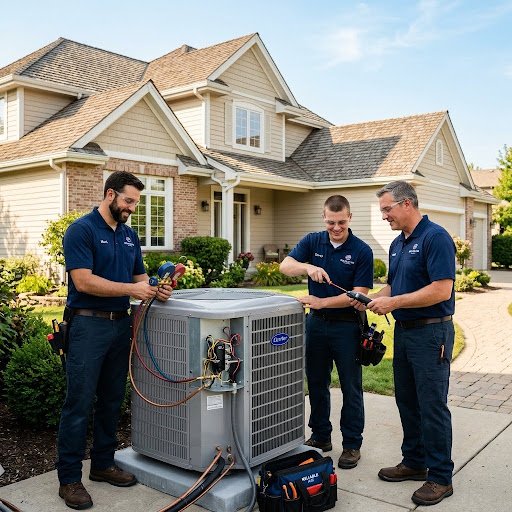
Most homeowners don’t think about their HVAC system until something goes wrong. The AC dies on the hottest day of summer. The furnace stops working on a freezing January night. That’s when you realize just how much comfort depends on a system that runs quietly in the background—and how important it is to have the right team ready to respond.
That’s where Nolan Air Heating & Cooling steps in. With a reputation built on reliability, quality workmanship, and genuine customer care, this isn’t just another HVAC company. It’s the team that homeowners and businesses call when they want the job done right.
What Sets a Great HVAC Service Apart?
Not all heating and cooling services are created equal. The difference between a good experience and a frustrating one often comes down to three things: speed, expertise, and transparency.
Speed matters because comfort isn’t optional—it’s essential. A home that’s too hot or too cold affects sleep, productivity, and overall well-being. Expertise matters because modern HVAC systems are more complex than ever, and guesswork is expensive. Transparency matters because nobody wants a surprise invoice after the work is done.
Nolan Air Heating & Cooling delivers on all three. Technicians arrive prepared, diagnose problems accurately, and communicate clearly before any work begins.
Heating Services That Keep Winters Manageable
When temperatures drop, a fully functioning heating system becomes the backbone of your home. Nolan Air Heating & Cooling offers comprehensive heating services, from routine maintenance and seasonal tune-ups to full system replacements.
Regular maintenance isn’t just a formality. A well-serviced furnace runs more efficiently, consumes less energy, and lasts significantly longer than one that’s neglected. Catching a minor issue before it becomes a breakdown saves money and stress—especially in the middle of winter when technician demand is at its peak.
Whether it’s a gas furnace, heat pump, or ductless mini-split system, the team brings hands-on experience across all major brands and configurations.
Cooling Solutions for Hot, Humid Summers
Summer cooling isn’t just about comfort—it’s about air quality, humidity control, and protecting your home from the kind of heat that warps wood, strains electronics, and disrupts sleep.
A properly sized and well-maintained air conditioning system does more than lower the temperature. It removes excess moisture from the air, filters airborne particles, and maintains consistent airflow throughout your home. An undersized unit runs constantly without achieving the right conditions. An oversized one cycles on and off too quickly, leaving humidity levels unchecked.
Getting this right requires experience. Nolan Air Heating & Cooling conducts thorough assessments before recommending any system, ensuring that every installation is matched to the specific needs of the home.
Why Routine Maintenance Pays for Itself
There’s a common misconception that HVAC maintenance is only necessary when something feels off. In reality, most system failures are preventable with consistent seasonal servicing.
Here’s what regular maintenance actually delivers:
- Lower energy bills: Clean filters, lubricated parts, and calibrated thermostats reduce the energy your system uses to maintain temperature.
- Extended equipment life: Well-maintained systems routinely outlast neglected ones by five to ten years.
- Fewer emergency calls: Most breakdowns follow warning signs that trained technicians can catch early.
- Better indoor air quality: Clean coils, ducts, and filters mean fewer allergens and pollutants circulating through your living space.
Scheduling a tune-up in the spring and fall—before peak seasons—keeps systems in peak condition when demand is highest.
The Right Team for Installations and Upgrades
Upgrading an HVAC system is one of the most impactful investments a homeowner can make. Modern systems are dramatically more energy-efficient than units manufactured just ten years ago. In many cases, replacing an aging system pays for itself through reduced utility bills within a few years.
Nolan Air Heating & Cooling is a trusted provider that brings the technical knowledge, proper equipment, and commitment to quality that turns a major home investment into lasting, year-round comfort for your family — and handles installations with the same attention to detail as every other service they provide.
Every installation includes proper load calculations, refrigerant handling, and system testing to ensure everything operates exactly as it should from day one.
Emergency Services When You Need Them Most
HVAC systems don’t follow business hours. A breakdown on a weekend or a holiday is just as disruptive—sometimes more so—than one on a weekday afternoon. That’s why availability matters as much as technical skill.
Nolan Air Heating & Cooling offers responsive emergency service because a family without heat in winter or without cooling during a heatwave can’t wait until Monday morning. Fast response times and experienced technicians mean problems get resolved quickly, without unnecessary downtime.
Comfort Is a Year-Round Commitment
Heating and cooling isn’t a seasonal concern—it’s a year-round responsibility. The decisions homeowners make about maintenance, upgrades, and service providers have a direct impact on the comfort, health, and energy costs of their home.
Choosing a company that takes that responsibility seriously makes all the difference. Nolan Air Heating & Cooling combines technical excellence with a genuine commitment to customer satisfaction, making it the clear choice for homeowners who want dependable service they can count on through every season.
Whether you need an emergency repair, a system upgrade, or simply want to get ahead of the next season with a professional tune-up, the right team is ready to help. Reach out to Nolan Air Heating & Cooling and experience the difference that real expertise makes.

The Questions Worth Asking Before Dental Implant Newcastle Treatment

What to Expect Before, During, and After Dental Implants Newcastle

Why Complete Temperature Services Is the HVAC Contractor Your Home Deserves

Clean425: Restoring Curb Appeal One Property at a Time

Nolan Air Heating & Cooling: Comfort You Can Count On All Year

Who Is Indiana Urban? Inside the Life of Karl Urban’s Son and Rising Actor

Jennifer Seyfried: All About Amanda Seyfried’s Sister, Her Life and Career

Who Is Zachary Hudson? Inside the Private Life of Cindy Williams’ Son

Cynthia Womack Biography: The Life, Career, and Legacy of Connie Britton’s Twin Sister

Who Is Stephen G. Walker? All About PinkPantheress’ Father and His Academic Career
Who Is Indiana Urban? Inside the Life of Karl Urban’s Son and Rising Actor
Jennifer Seyfried: All About Amanda Seyfried’s Sister, Her Life and Career
Who Is Zachary Hudson? Inside the Private Life of Cindy Williams’ Son
Cynthia Womack Biography: The Life, Career, and Legacy of Connie Britton’s Twin Sister
Who Is Stephen G. Walker? All About PinkPantheress’ Father and His Academic Career
-
Biography5 months ago
Who Is Indiana Urban? Inside the Life of Karl Urban’s Son and Rising Actor
-
Biography4 months ago
Jennifer Seyfried: All About Amanda Seyfried’s Sister, Her Life and Career
-
Biography4 months ago
Who Is Zachary Hudson? Inside the Private Life of Cindy Williams’ Son
-
Biography5 months ago
Cynthia Womack Biography: The Life, Career, and Legacy of Connie Britton’s Twin Sister
-
 Biography3 months ago
Who Is Stephen G. Walker? All About PinkPantheress’ Father and His Academic Career
-
 Biography5 months ago
Who Was Gretchen Knauff? The Private Life of Jennifer Coolidge’s Mother
-
 Biography4 months ago
Who is Lynn Levesque? Everything to Know About Triple H’s Sister
-
 Biography4 months ago
Lynn Payne: Inside the Life and Love Story of Randy Savage’s Wife