
Law
Can Family Members Sue for Wrongful Death After a Chicago Drunk Driving Accident?


Losing a loved one to a preventable fatal collision is one of the most devastating experiences a family can endure. When that collision is caused by an impaired driver who chose to get behind the wheel under the influence of alcohol or drugs, the overwhelming grief is often compounded by profound outrage and confusion.
In the immediate aftermath of a fatal drunk driving accident on Chicago roads—whether on the Kennedy Expressway, Lake Shore Drive, or local city streets—families are left grappling with emotional trauma alongside sudden financial burdens, including medical bills, funeral expenses, and the sudden loss of the victim’s income and household support.
In Illinois, the legal system provides a civil pathway for surviving family members to seek justice, financial stability, and accountability: a wrongful death lawsuit. While no amount of monetary compensation can ever replace a cherished family member, filing a claim holds negligent parties accountable and provides vital economic security for those left behind.
Civil Wrongful Death Claims vs. Criminal Prosecution in Illinois
One of the most common points of confusion for grieving families is the distinction between criminal court proceedings and civil lawsuits. Following a fatal drunk driving accident, the Cook County State’s Attorney’s Office or local law enforcement will usually initiate criminal charges against the intoxicated driver, such as Aggravated Driving Under the Influence (DUI) or reckless homicide.
While both proceedings stem from the same tragic event, they operate in entirely different legal spheres with distinct purposes, standards of proof, and outcomes.
| Feature | Criminal Prosecution | Civil Wrongful Death Lawsuit |
| Primary Purpose | To punish the offender (jail/prison, fines, license revocation) and deter future crimes. | To compensate the surviving family members for financial and emotional losses. |
| Who Files the Case? | The government (State of Illinois / Cook County Prosecutor). | The Personal Representative of the victim’s estate on behalf of surviving family. |
| Burden of Proof | “Beyond a Reasonable Doubt” (highest legal standard). | “Preponderance of the Evidence” (more likely true than not true, >50%). |
| Outcome | Incarceration, probation, fines paid to the state, community service. | Monetary compensation paid directly to the victim’s estate and family. |
How a Criminal Case Impacts Your Civil Claim
A criminal conviction can significantly strengthen a civil wrongful death lawsuit. Under Illinois civil law, if a driver is convicted of a criminal DUI, that conviction can often be used as evidence of negligence per se. Negligence per se is a legal doctrine establishing that an individual acted negligently simply by breaking a safety statute—such as driving with a blood alcohol concentration (BAC) of 0.08% or higher, which violates Illinois law (625 ILCS 5/11-501).
However, even if the criminal charges are reduced or the driver is acquitted in criminal court, family members can still prevail in a civil wrongful death suit. Because the civil burden of proof (“preponderance of the evidence”) is substantially lower than the criminal standard (“beyond a reasonable doubt”), evidence that was insufficient for a criminal conviction may still be more than sufficient to establish civil liability.
Who Has the Legal Right to Sue for Wrongful Death in Illinois?
Under the Illinois Wrongful Death Act (740 ILCS 180/), a civil action can be brought whenever the death of a person is caused by a wrongful act, neglect, or default that would have entitled the injured party to maintain an action and recover damages if death had not ensued.
However, Illinois law strictly dictates who can formally file the lawsuit and who is eligible to receive the financial recovery.
+———————————————————————–+
| THE DECEASED (DECEDENT) |
+———————————————————————–+
|
v
+———————————————————————–+
| PERSONAL REPRESENTATIVE / EXECUTOR |
| (Files the lawsuit on behalf of the estate) |
+———————————————————————–+
|
v
+———————————————————————–+
| PRIMARY BENEFICIARIES (NEXT OF KIN) |
| – Surviving Spouse |
| – Surviving Children (minor or adult) |
| – Surviving Parents / Siblings (if no spouse or children exist) |
+———————————————————————–+
The Role of the Personal Representative
In Illinois, individual family members do not file wrongful death claims individually in their own names. Instead, the lawsuit must be formally brought by the Personal Representative (also known as the Executor or Administrator) of the deceased person’s estate.
- If the decedent had a valid Will: The person named as the executor in the will is appointed as the personal representative.
- If the decedent did not have a Will (Intestate): The Probate Court will appoint a personal representative, typically prioritizing a surviving spouse, adult child, parent, or sibling.
Who Are the Beneficiaries?
Although the Personal Representative is the named plaintiff in the court filings, any financial settlement or jury award recovered through the wrongful death claim does not belong to the representative personally (unless they are also an eligible beneficiary). Instead, the proceeds are distributed for the exclusive benefit of the decedent’s surviving spouse and next of kin.
Under Illinois law, “next of kin” generally includes:
- Surviving Spouse and Children: If the decedent leaves behind a spouse and/or biological or legally adopted children, they are the primary beneficiaries.
- Parents and Siblings: If the decedent had no spouse and no children at the time of death, the surviving parents and brothers/sisters are considered the primary next of kin entitled to recovery.
The trial court determines how the proceeds are divided among the beneficiaries based on the degree of financial and emotional dependency each relative had on the deceased individual.
Wrongful Death Act vs. Illinois Survival Act: Understanding the Difference
When a loved one dies in a drunk driving crash in Chicago, attorneys routinely file two distinct civil claims under Illinois law: a Wrongful Death Act claim and a Survival Act claim. Understanding the distinction between these two claims is essential for ensuring that all potential damages are fully pursued.
FATAL ACCIDENT OCCURS
|
+————————-+————————-+
| |
v v
ILLINOIS WRONGFUL DEATH ACT ILLINOIS SURVIVAL ACT
(740 ILCS 180/) (755 ILCS 5/27-6)
| |
Focuses on losses suffered by Focuses on losses suffered by
SURVIVING FAMILY MEMBERS. the DECEDENT prior to death.
| |
Examples: Examples:
– Loss of financial support – Pre-death pain & suffering
– Loss of companionship & consortium – Pre-death medical bills
– Mental anguish, grief, and sorrow – Pre-death lost wages
1. The Illinois Wrongful Death Act (740 ILCS 180/)
The Wrongful Death Act compensates the surviving family members for the personal losses they suffer as a direct result of their loved one’s passing. This statute looks forward from the moment of death into the future, addressing how the absence of the victim impacts the lives of their surviving relatives.
2. The Illinois Survival Act (755 ILCS 5/27-6)
The Survival Act allows the estate to “step into the shoes” of the deceased and pursue personal injury claims that the victim would have been entitled to bring had they survived the collision. This claim covers the window of time between the initial crash and the official declaration of death (whether that duration was several days in an intensive care unit or mere minutes at the scene).
Under the Survival Act, the estate can recover compensation for:
- Pre-death physical pain and suffering experienced by the victim.
- Pre-death severe emotional distress and mental anguish (such as the conscious fear of impending impact).
- Medical expenses incurred between the accident and death.
- Lost earnings from the time of injury until death.
Potentially Liable Parties in a Chicago Drunk Driving Wrongful Death Case
In a drunk driving accident, liability may extend beyond the drunk driver alone. A comprehensive investigation often reveals multiple parties whose actions or omissions contributed to the tragic outcome. Identifying all potentially liable parties is crucial for securing full financial compensation, especially when an individual driver’s auto insurance policy limits are insufficient to cover catastrophic losses.
1. The Drunk Driver
The most obvious liable party is the intoxicated driver. Under civil law, all motorists owe a duty of care to operate their vehicles safely. Driving while impaired by alcohol, marijuana, prescription drugs, or illegal substances constitutes a clear breach of that duty.
2. Commercial Alcohol Vendors (The Illinois Dram Shop Act)
Illinois has a specific statute known as the Dram Shop Act (235 ILCS 5/6-21). Under this law, commercial establishments that serve or sell alcoholic beverages—such as bars, taverns, restaurants, nightclubs, sports stadiums, and liquor stores—can be held strictly liable if they serve alcohol that causes or contributes to a customer’s intoxication, and that customer subsequently causes injury or death to another person.
Key aspects of the Illinois Dram Shop Act include:
- No Need to Prove Overservice: Unlike dram shop laws in many other states, Illinois law does not require proof that the bar or restaurant served someone who was “visibly intoxicated.” You only need to prove that the business sold or gave alcohol to the person, that the alcohol contributed to their intoxication, and that the intoxication caused the fatal crash.
- Statutory Liability Caps: Illinois places statutory monetary caps on dram shop liability that adjust annually for inflation. For deaths or injuries occurring in recent years, dram shop recovery caps generally limit maximum liability per person/incident to a specific statutory limit (often around $80,000 to $100,000+ depending on the exact year of the incident). While dram shop claims may not cover all damages, they offer an additional source of insurance coverage.
- Strict One-Year Statute of Limitations: Dram shop claims carry a much shorter deadline than general wrongful death claims.
3. Employers (Vicarious Liability / Respondeat Superior)
If the drunk driver was operating a vehicle within the scope of their employment at the time of the collision—such as a delivery driver, rideshare operator, commercial trucker, or corporate employee driving a company car—the employer can be held vicariously liable for the driver’s actions under the legal doctrine of respondeat superior. Furthermore, the employer might be directly liable for negligent hiring, supervision, or retention if they failed to check the employee’s driving record or allowed a driver with a history of alcohol abuse to operate a commercial vehicle.
4. Social Hosts (Limited Liability in Illinois)
Unlike commercial alcohol vendors, social hosts (such as individuals hosting a private house party for adults) generally cannot be held liable under traditional dram shop principles for serving alcohol to adult guests who subsequently cause a crash. However, Illinois recognizes liability under the Drug and Alcohol Impaired Minor Responsibility Act (740 ILCS 20/), which allows civil lawsuits against adults who knowingly supply or pay for alcohol/drugs provided to minors under age 21 who subsequently cause death or injury.
What Compensation Can Family Members Recover?
In an Illinois wrongful death lawsuit, compensation (referred to as “damages”) is divided into economic and non-economic categories. The goal is to provide financial relief for tangible losses while acknowledging the profound human impact of losing a beloved family member.
Economic Damages (Financial Losses)
Economic damages compensate the estate and surviving family members for objective, calculable financial impacts, including:
- Loss of Financial Support: The income, wages, salary, and benefits (such as health insurance or pension contributions) that the decedent would have reasonably earned and contributed to the household over their expected working lifespan.
- Loss of Services and Goods: The financial value of household labor, childcare, home maintenance, advice, and assistance the deceased provided.
- Loss of Prospective Inheritance: The wealth or assets the decedent likely would have accumulated and passed down to surviving heirs had their life not been cut short.
- Funeral and Burial Expenses: The full cost of memorial services, burial, cremation, and headstone arrangements.
- Medical Bills: Hospital and emergency medical costs incurred prior to the victim’s passing.
Non-Economic Damages (Human & Emotional Losses)
Non-economic damages address the intangible, deeply personal impact of the loss:
- Grief, Sorrow, and Mental Suffering: In 2007, the Illinois legislature amended the Wrongful Death Act to explicitly allow surviving family members to recover compensation for their own grief and mental anguish caused by the sudden death.
- Loss of Society and Companionship: Compensation for the loss of love, companionship, comfort, guidance, protection, and emotional support the deceased provided to their family.
- Loss of Consortium: Specific damages awarded to a surviving spouse for the loss of marital intimacy, companionship, affection, and spousal support.
- Loss of Parental Guidance: Compensation for minor or adult children for the loss of moral, educational, and emotional guidance, instruction, and training previously offered by a deceased parent.
Are Punitive Damages Available in Illinois Wrongful Death Cases?
Historically, Illinois law prohibited punitive damages in wrongful death actions. However, House Bill 219 (signed into law in August 2023) amended Illinois law (740 ILCS 180/2) to permit surviving family members to recover punitive damages in wrongful death and survival actions.
Punitive damages are designed to punish defendants for willful, wanton, or grossly negligent conduct and to deter similar egregious behavior in the future. Because driving while significantly intoxicated is a reckless and deliberate act of endangerment, drunk driving fatal accidents often present strong grounds for pursuing punitive damages against the impaired driver.
Critical Deadlines: Statute of Limitations in Illinois
Families grieving a sudden loss must navigate strict legal deadlines known as the Statute of Limitations. Failing to file a lawsuit within these mandatory timeframes will permanently bar surviving relatives from seeking financial recovery in court.
+———————————————————————————–+
| IMPORTANT ILLINOIS LEGAL DEADLINES |
+———————————————————————————–+
| CLAIM TYPE | STATUTE OF LIMITATIONS / DEADLINE |
+—————————————+——————————————-+
| General Wrongful Death Claim | 2 Years from the date of death |
+—————————————+——————————————-+
| Survival Act Claim | 2 Years from the date of injury/death |
+—————————————+——————————————-+
| Illinois Dram Shop Act (Bars/Vendors)| 1 Year from the date of the incident |
+—————————————+——————————————-+
| Governmental Entity Involved | 1 Year (under Local Govt. Immunity Act) |
+———————————————————————————–+
- General Wrongful Death Action: In Illinois, a wrongful death lawsuit must generally be filed within two (2) years from the date of the person’s death.
- Dram Shop Claims (Strict 1-Year Rule): If you intend to file a claim against a bar, restaurant, or alcohol vendor under the Illinois Dram Shop Act, the lawsuit must be filed within one (1) year of the date the alcohol was served/the accident occurred. This is a non-negotiable statutory deadline.
- Claims Against Municipalities or Transit Agencies: If the accident involved a city-owned vehicle (such as a City of Chicago municipal truck, CTA bus, or Cook County vehicle) or dangerous road design maintained by a government entity, notice requirements and statutes of limitation can be reduced to one (1) year under the Local Governmental and Governmental Employees Tort Immunity Act (745 ILCS 10/).
Because these deadlines vary significantly based on the details of the crash, consulting a knowledgeable personal injury attorney immediately after a fatal accident is vital to ensure no critical statutes are missed.
How to Prove Liability and Negligence in a Drunk Driving Case
Establishing liability in a civil drunk driving wrongful death lawsuit requires proving four fundamental legal elements by a preponderance of the evidence:
+——————+ +——————+ +——————+ +——————+
| 1. DUTY OF CARE | ==> | 2. BREACH OF DUTY| ==> | 3. CAUSATION | ==> | 4. DAMAGES |
| Driver owed a | | Driver operated | | Impairment directly| | Fatal injuries |
| duty to drive | | vehicle while | | caused the crash | | resulted in measurable|
| safely. | | intoxicated. | | and death. | | economic/human loss. |
+——————+ +——————+ +——————+ +——————+
Essential Evidence Needed in Chicago Drunk Driving Cases
While it may seem obvious that a drunk driver was at fault, insurance companies and defense attorneys often dispute liability, comparative fault, or the extent of damages. Building an unassailable case requires gathering robust physical, forensic, and documentary evidence:
- Official Police Reports and Crash Reconstruction: The Chicago Police Department (CPD) or Illinois State Police (ISP) Major Crash Assistance Team (MCAT) usually conducts comprehensive investigations for fatal collisions, including scaling crash scenes, measuring skid marks, and analyzing vehicle black box data (Event Data Recorders).
- Chemical Blood Alcohol Content (BAC) Results: Breathalyzer results, blood test logs, and urine toxicology reports obtained at the scene or hospital provide crucial scientific proof of impairment.
- Field Sobriety Test Records and Dashcam/Bodycam Footage: Video recordings captured by responding police officers offer vivid visual evidence of the driver’s slurred speech, loss of balance, and inability to follow instructions.
- Point-of-Sale (POS) Receipts and Cell Phone Records: Credit card receipts, bar tabs, and time-stamped surveillance footage from local Chicago establishments can identify which bars served the driver, establish the timeline of alcohol consumption, and support a Dram Shop Act claim.
- Witness Testimony: Statements from eye-witnesses who observed erratic driving behavior (swerving, speeding, running red lights) prior to the collision.
- Expert Witnesses: Toxicologists can extrapolate BAC levels back to the time of the crash, accident reconstructionists can prove how the collision occurred, and economic experts can calculate the total lifetime financial loss to the surviving family.
Steps Family Members Should Take After a Fatal Chicago Accident
The days and weeks following a fatal drunk driving crash are overwhelming. Taking structured steps can help protect your family’s legal rights while allowing you the space to grieve.
1. Request the Appointment of a Personal Representative
Consult with a probate attorney or personal injury attorney to open an estate in the Cook County Probate Court (or relevant county court) so a Personal Representative can be officially designated to act on behalf of the deceased and their beneficiaries.
2. Preserve All Physical and Digital Evidence
Do not destroy or alter any potential evidence. Keep all physical items related to the accident, medical treatments, and funeral arrangements. Request that vehicle wreckage be held in a secure facility so accident reconstruction experts can inspect the black box and structural damage.
3. Avoid Directly Negotiating with Insurance Adjusters
Insurance company representatives for the drunk driver or commercial establishments may reach out quickly after an accident. They may attempt to offer a swift, lowball settlement before the full extent of financial and non-economic damages is known, or attempt to record statements that could be used to minimize payouts later. Politely decline to provide recorded statements and direct all communication to your legal representative.
4. Consult an Experienced Chicago Wrongful Death Attorney
Wrongful death cases involving drunk driving require swift action, complex evidence preservation, probate administration, and aggressive negotiation against well-funded insurance carriers. Retaining an attorney who specializes in Illinois wrongful death law ensures that your family’s rights are zealously defended from day one.
Conclusion
Can family members sue for wrongful death after a Chicago drunk driving accident? Yes. Under Illinois law, surviving family members—through the personal representative of the victim’s estate—have the legal right to seek comprehensive monetary compensation for their financial losses, mental suffering, loss of companionship, and pre-death pain endured by their loved one.
By pursuing claims under the Illinois Wrongful Death Act, the Survival Act, and, where applicable, the Dram Shop Act or employer liability doctrines, families can hold drunk drivers and responsible businesses accountable. While a civil lawsuit cannot undo a devastating tragedy, securing financial justice provides surviving spouses, children, and parents with the stability and closure needed to move forward.
Law
What To Expect When Going Up Against Commercial Truck Companies After an Accident in South Carolina
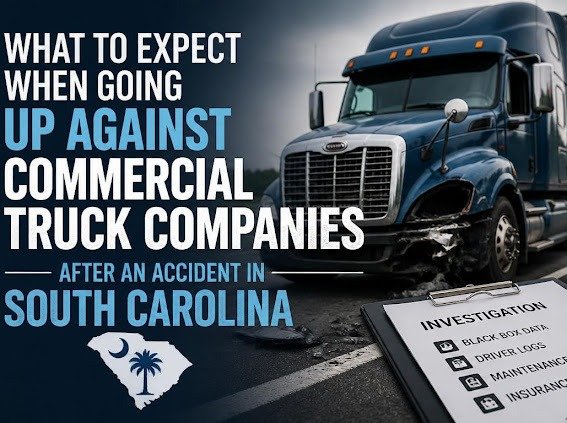
A commercial truck accident can change your life in seconds. One moment you are driving on a South Carolina highway, and the next you are dealing with injuries, medical bills, missed work, and endless stress. What makes these crashes even more difficult is the fact that victims are often not just dealing with a single driver. In many cases, they are going up against large trucking companies, insurance carriers, corporate lawyers, and accident investigators who immediately begin protecting their own interests.
Truck accident claims in South Carolina are very different from ordinary car accident cases. Commercial trucking companies often have powerful legal teams and aggressive insurance adjusters whose main goal is reducing payouts. If you have been injured in a crash involving an 18-wheeler, semi-truck, delivery truck, tanker truck, or another commercial vehicle in South Carolina, it is important to understand what you may face during the claims process.
Knowing what to expect can help you protect yourself, avoid common mistakes, and prepare for the challenges ahead.
South Carolina Trucking Companies Move Fast After an Accident
One of the biggest surprises for accident victims is how quickly trucking companies react after a crash. In many cases, the company sends investigators, attorneys, and insurance representatives to the accident scene almost immediately.
Their job is not to help injured victims. Their job is to protect the trucking company from financial liability.
These teams often begin collecting evidence within hours of the collision. They may review the truck’s black box data, inspect the damaged vehicle, interview witnesses, and photograph the crash scene before victims even leave the hospital.
While you are focused on medical treatment and recovery, the trucking company is already building its defense strategy.
This is one reason why victims should act quickly after a commercial truck accident. Important evidence can disappear fast. Surveillance footage may be deleted, skid marks can fade, and electronic driving records may be lost if they are not preserved properly.
Expect the Insurance Company to Contact You Quickly
After a truck accident in South Carolina, you may receive calls from insurance adjusters sooner than expected. These representatives may sound friendly and concerned, but it is important to remember that they work for the trucking company’s insurer.
Insurance companies often look for ways to minimize claims. They may ask leading questions or try to get recorded statements that can later be used against you.
Some adjusters may even pressure victims into accepting quick settlements before the full extent of injuries is known.
At first, an early settlement offer may sound tempting. Medical bills pile up quickly, and many accident victims lose income while recovering. However, accepting a settlement too early can be a major mistake.
Truck accident injuries are often severe. Victims may require surgery, rehabilitation, physical therapy, or long-term medical care. Once you accept a settlement, you may lose the ability to seek additional compensation later.
Before discussing settlements or signing documents, it is usually wise to fully understand the extent of your injuries and losses.
Commercial Truck Cases in SC Are Usually More Complex
Truck accident claims are rarely simple. Unlike ordinary car crashes involving two drivers, commercial trucking accidents may involve multiple parties.
Depending on the situation, responsibility could fall on:
- The truck driver
- The trucking company
- A cargo loading company
- A truck maintenance provider
- The truck manufacturer
- A third-party contractor
- Another motorist
Determining liability can become complicated very quickly.
For example, a trucking company may argue that the driver was an independent contractor rather than an employee. A maintenance company may blame defective truck parts. A cargo company may claim improper loading was not their fault.
Each party may try shifting blame to someone else.
This creates a difficult legal battle for accident victims who are already dealing with physical and emotional recovery.
Federal Trucking Regulations Often Become Important
Commercial truck drivers and trucking companies must follow strict federal safety regulations. These rules are designed to reduce accidents and improve highway safety.
Truck accident investigations often involve reviewing whether these rules were violated.
Some common regulations include:
Hours-of-Service Rules
Truck drivers are limited in how many hours they can drive without rest. Fatigue is a major issue in the trucking industry, and exhausted drivers can become extremely dangerous.
If a driver exceeded legal driving limits, this could strengthen an injury claim.
Vehicle Maintenance Requirements
Commercial trucks require regular inspections and maintenance. Brake failures, tire blowouts, and steering problems can lead to catastrophic accidents.
Investigators often review maintenance records after serious crashes.
Drug and Alcohol Testing
Commercial drivers are subject to strict drug and alcohol rules. Testing may occur after certain types of accidents.
Cargo Loading Standards
Improperly loaded cargo can make trucks unstable or cause cargo spills that create dangerous roadway conditions.
Understanding these regulations requires experience and careful investigation. Trucking companies usually know how to defend themselves aggressively when violations are suspected.
Truck Accident Injuries Are Often Severe
Commercial trucks are massive compared to passenger vehicles. Fully loaded tractor-trailers can weigh tens of thousands of pounds. Because of this size difference, truck crashes often cause devastating injuries.
Victims may suffer:
- Traumatic brain injuries
- Spinal cord damage
- Broken bones
- Internal bleeding
- Neck injuries
- Burns
- Permanent disabilities
- Emotional trauma
Some people face years of medical treatment and rehabilitation after a serious truck accident.
Severe injuries also mean higher financial losses. Medical expenses, lost wages, reduced earning capacity, and long-term care costs can become overwhelming.
Trucking companies and insurers know these cases can involve significant compensation claims, which is why they often fight hard to reduce payouts.
The Truck Driver May Not Be the Only Problem
Many people assume the truck driver is always the main person at fault. While driver negligence is common, commercial trucking companies themselves may contribute to accidents in several ways.
For example, some companies:
- Pressure drivers to meet unrealistic deadlines
- Encourage unsafe driving schedules
- Ignore maintenance problems
- Hire unqualified drivers
- Fail to provide proper training
- Overload trucks
- Ignore safety violations
In some situations, company policies create dangerous working conditions that increase accident risks.
A truck driver may have been speeding or driving while fatigued because the company placed intense pressure on delivery schedules.
This is why commercial truck accident investigations often examine the company’s practices, not just the driver’s behavior.
Evidence in Truck Cases Is Extremely Important
Truck accident claims rely heavily on evidence. The stronger the evidence, the more difficult it becomes for trucking companies to deny responsibility.
Some important evidence may include:
- Black box data
- Driver logbooks
- Dashcam footage
- GPS tracking records
- Maintenance records
- Drug and alcohol testing results
- Witness statements
- Police reports
- Accident reconstruction reports
- Cell phone records
Many commercial trucks contain electronic control modules, often called black boxes. These devices can record valuable information such as speed, braking activity, steering movements, and engine performance before the crash.
This data can play a major role in proving negligence.
However, trucking companies may control access to some of this evidence. Acting quickly can help preserve critical information before it is lost or destroyed.
Expect the Trucking Company to Protect Its Reputation
Commercial trucking companies often worry about more than just financial losses. Serious accidents can damage their public image, safety ratings, and business relationships.
Because of this, some companies aggressively defend claims to avoid admissions of wrongdoing.
They may deny liability, dispute injuries, or argue that the victim contributed to the crash.
In South Carolina, comparative negligence laws can affect compensation. If the trucking company convinces a court that the injured victim was partially at fault, compensation could be reduced.
For example, the company may claim:
- You were speeding
- You changed lanes improperly
- You failed to react in time
- You were distracted while driving
Even if these claims are weak, they may still be used as part of a defense strategy.
Medical Records Become a Major Focus
Your medical condition will likely become one of the most heavily examined parts of the case.
Insurance companies often review:
- Emergency room records
- Doctor reports
- Imaging scans
- Physical therapy notes
- Prescription records
- Prior medical history
They may try to argue that your injuries were pre-existing or less serious than claimed.
For example, if you previously had back pain before the accident, the insurance company might claim your current condition was unrelated to the crash.
This is why consistent medical treatment is important after a truck accident.
Delaying treatment, missing appointments, or ignoring medical advice can create problems during the claims process.
Settlement Negotiations Can Take Time
Truck accident cases are rarely resolved overnight.
Because these claims often involve large amounts of money, trucking companies and insurers usually investigate carefully before offering settlements.
Negotiations may take months or longer depending on:
- The severity of injuries
- Medical treatment timelines
- Liability disputes
- Insurance coverage issues
- The amount of evidence available
Victims sometimes become frustrated by delays, especially when bills continue piling up.
However, rushing into a low settlement offer can create long-term financial problems.
Serious truck accident injuries may affect your ability to work, earn income, or maintain your quality of life for years.
A settlement should account for both current and future losses.
Some Cases End Up in Court
While many truck accident claims settle outside of court, some cases proceed to litigation.
This may happen when:
- Liability is disputed
- Settlement offers are too low
- Multiple parties are involved
- Injuries are severe
- The trucking company refuses to accept responsibility
Court cases involving commercial trucks can become highly technical.
Accident reconstruction experts, medical professionals, trucking industry specialists, and economic experts may all become involved.
The legal process may include:
- Depositions
- Discovery requests
- Evidence review
- Expert testimony
- Mediation
- Trial preparation
Litigation can feel stressful, but sometimes it becomes necessary to pursue fair compensation.
Social Media Can Hurt Your Claim
Many accident victims do not realize how closely insurance companies monitor social media activity.
Photos, videos, and comments posted online may be used against you.
For example, if you claim severe injuries but later post photos participating in physical activities, the insurance company may argue your injuries are exaggerated.
Even harmless posts can be taken out of context.
After a truck accident, it is usually smart to be cautious about what you share online while the claim remains active.
Financial Pressure Is Common
One of the hardest parts of truck accident cases is the financial pressure many victims experience.
Medical bills can become overwhelming very quickly. Some people are unable to work for weeks or months after an accident.
At the same time, insurance companies may delay settlements or dispute claims.
This creates enormous stress for injured individuals and families.
Victims may worry about:
- Mortgage payments
- Rent
- Utility bills
- Lost wages
- Ongoing treatment costs
- Family expenses
Trucking companies understand that financial pressure sometimes pushes people into accepting lower settlements than they deserve.
That is why patience and careful decision-making are important during the claims process.
Emotional Trauma Is Often Overlooked
Truck accidents affect more than just physical health.
Many victims experience serious emotional trauma after a collision involving a large commercial vehicle.
Some people struggle with:
- Anxiety
- Depression
- Fear of driving
- Sleep problems
- Flashbacks
- Post-traumatic stress
Emotional suffering can impact relationships, careers, and daily life.
Unfortunately, insurance companies sometimes focus heavily on visible injuries while minimizing emotional damages.
Mental health treatment and emotional recovery are often important parts of the healing process after a serious truck accident.
Trucking Companies Often Have Large Insurance Policies
Commercial trucking companies usually carry large insurance policies because truck accidents can cause catastrophic damage.
While this may sound beneficial for victims, it also means insurers work aggressively to protect themselves from expensive payouts.
Large commercial insurers often have experienced legal teams and extensive resources.
They may investigate every detail of the accident and challenge nearly every aspect of the claim.
Victims should expect a more aggressive defense compared to ordinary car accident cases.
Independent Investigations May Be Necessary
Police reports are important, but they may not tell the entire story.
In many truck accident cases, additional investigations become necessary.
Accident reconstruction experts may analyze:
- Vehicle damage
- Road conditions
- Speed calculations
- Skid marks
- Impact angles
- Black box data
These investigations can help determine exactly how the crash occurred.
Commercial trucking companies sometimes conduct their own internal investigations immediately after accidents. Having independent experts review evidence can help prevent one-sided conclusions.
South Carolina Laws May Affect Your Case
Truck accident claims in South Carolina are affected by state laws regarding negligence, insurance, and compensation.
For example, South Carolina follows a modified comparative negligence system. This means compensation may be reduced if the injured person shares fault for the accident.
If a victim is found more than 50 percent responsible, they may be barred from recovering damages altogether.
State deadlines also apply to filing personal injury claims.
Missing important deadlines can seriously damage your ability to recover compensation.
Understanding how South Carolina laws interact with federal trucking regulations can become complicated in serious accident cases.
Families May Face Wrongful Death Claims
Sadly, some commercial truck accidents are fatal.
Families who lose loved ones may face overwhelming grief, financial hardship, and emotional devastation.
Wrongful death claims may involve compensation for:
- Funeral expenses
- Medical bills
- Lost financial support
- Loss of companionship
- Emotional suffering
These cases are often emotionally difficult and legally complex, especially when trucking companies dispute liability.
Families should expect trucking companies and insurers to investigate fatal crashes aggressively.
Recovery Often Takes Longer Than Expected
Many accident victims underestimate how long recovery may take after a serious truck collision.
Healing may involve:
- Multiple surgeries
- Rehabilitation
- Physical therapy
- Occupational therapy
- Pain management
- Counseling
Some injuries create permanent limitations that affect daily life forever.
Recovery is not always linear. Some people improve quickly while others experience setbacks and chronic pain.
This uncertainty can make settlement negotiations more complicated because future medical needs may still be unclear.
The Process Can Feel Intimidating
Going up against a commercial trucking company can feel overwhelming.
Victims may feel intimidated by:
- Corporate lawyers
- Insurance investigators
- Legal paperwork
- Medical evaluations
- Financial stress
- Delays in the process
Many people have never dealt with a serious legal claim before, especially one involving a major trucking company.
Understanding the process can reduce some of the fear and uncertainty.
Truck accident claims are challenging, but preparation and knowledge can help victims avoid costly mistakes.

The Ultimate Office Spring Cleaning Checklist for Small Businesses

Optimizing Industrial Packaging Automation: Technical Standards, Electrical Safety, and Line Efficiency

What Are the Effects of Too Much Sun Exposure?

How to Keep a Useful Menstrual Health Diary

7 Meaningful Ways to Preserve Memories From Your Favorite Trips

Who Is Indiana Urban? Inside the Life of Karl Urban’s Son and Rising Actor

Jennifer Seyfried: All About Amanda Seyfried’s Sister, Her Life and Career

Who Is Zachary Hudson? Inside the Private Life of Cindy Williams’ Son

Who Is Stephen G. Walker? All About PinkPantheress’ Father and His Academic Career

Cynthia Womack Biography: The Life, Career, and Legacy of Connie Britton’s Twin Sister
Who Is Indiana Urban? Inside the Life of Karl Urban’s Son and Rising Actor
Jennifer Seyfried: All About Amanda Seyfried’s Sister, Her Life and Career
Who Is Zachary Hudson? Inside the Private Life of Cindy Williams’ Son
Who Is Stephen G. Walker? All About PinkPantheress’ Father and His Academic Career
Cynthia Womack Biography: The Life, Career, and Legacy of Connie Britton’s Twin Sister
-
Biography7 months ago
Who Is Indiana Urban? Inside the Life of Karl Urban’s Son and Rising Actor
-
Biography7 months ago
Jennifer Seyfried: All About Amanda Seyfried’s Sister, Her Life and Career
-
Biography7 months ago
Who Is Zachary Hudson? Inside the Private Life of Cindy Williams’ Son
-
 Biography6 months ago
Who Is Stephen G. Walker? All About PinkPantheress’ Father and His Academic Career
-
Biography8 months ago
Cynthia Womack Biography: The Life, Career, and Legacy of Connie Britton’s Twin Sister
-
 Biography7 months ago
Who is Lynn Levesque? Everything to Know About Triple H’s Sister
-
 Biography8 months ago
Who Was Gretchen Knauff? The Private Life of Jennifer Coolidge’s Mother
-
 Biography7 months ago
Lynn Payne: Inside the Life and Love Story of Randy Savage’s Wife