Crypto & Trading
Can Governments and Crypto Coexist? The Future of Digital Sovereignty


The relationship between governments and cryptocurrencies has always felt like a standoff between two fundamentally different visions of how money and power should work.
On one side, governments rely on centralized control, regulation, and oversight. On the other hand, cryptocurrencies were designed to be decentralized, borderless, and resistant to control. At first glance, coexistence seems unlikely. Yet, as digital finance evolves, the reality is becoming far more nuanced.
Cryptocurrencies emerged with a promise: to remove intermediaries and give individuals direct control over their assets. This idea challenged traditional financial systems, where central banks and governments play a dominant role. Early reactions from authorities ranged from skepticism to outright hostility. Concerns about money laundering, tax evasion, and financial instability were not unfounded. At the same time, governments recognized something important — this technology was not going away.
As adoption grew, so did the need for a more structured approach. Many governments began shifting from resistance to regulation. Instead of banning cryptocurrencies, they started building frameworks to integrate them into existing financial systems. This marked a turning point. Coexistence no longer meant one side winning over the other, but rather finding a balance between innovation and control.
One of the key challenges in this balance is the concept of digital sovereignty. Traditionally, sovereignty in finance means that a government controls its currency, monetary policy, and financial infrastructure. Cryptocurrencies complicate this idea. A decentralized currency like Bitcoin operates outside national borders, making it difficult for any single government to influence or regulate it fully. This raises an important question: how can governments maintain sovereignty in a world where financial systems are increasingly global and decentralized?
Some countries are addressing this by developing their own digital currencies, often referred to as central bank digital currencies (CBDCs). These are government-backed digital forms of national currency, designed to combine the efficiency of crypto technology with the stability and control of traditional systems. While CBDCs are very different from decentralized cryptocurrencies, their existence shows that governments are willing to adopt elements of blockchain technology rather than reject it outright.
At the same time, private cryptocurrencies continue to evolve. They are becoming more user-friendly, more scalable, and more integrated into everyday financial activities. Payment processors, financial institutions, and even governments themselves are experimenting with blockchain-based solutions. This gradual integration suggests that coexistence is not only possible but already happening.
However, the path forward is not without tension. Regulation remains a major point of friction. Governments aim to protect consumers and maintain financial stability, while the crypto community often values privacy and independence above all else. Striking the right balance is difficult. Overregulation can stifle innovation and push activity underground, while underregulation can lead to misuse and loss of trust.
Another important factor is public perception. For cryptocurrencies to coexist with government systems, they must gain broader trust. This includes not only trust in the technology but also in how it is used and governed. As more people interact with digital assets, expectations around transparency, security, and accountability will continue to grow.
The future of digital sovereignty will likely involve a hybrid model. Governments will retain control over national monetary systems while allowing space for decentralized alternatives to exist and innovate. This could lead to a more diverse financial ecosystem, where individuals and businesses can choose between different types of digital assets depending on their needs.
In this evolving landscape, cooperation may become more important than competition. Governments can benefit from the efficiency and transparency of blockchain technology, while the crypto industry can gain legitimacy and wider adoption through clear regulatory frameworks. Both sides have something to gain, and the success of digital finance may depend on their ability to work together.
Ultimately, the question is not whether governments and cryptocurrencies can coexist, but how that coexistence will be shaped. The future will not be defined by a single system replacing another, but by the interaction between centralized authority and decentralized innovation. In that sense, digital sovereignty is not about control alone — it is about adaptation, collaboration, and the willingness to embrace change in a rapidly transforming financial world.


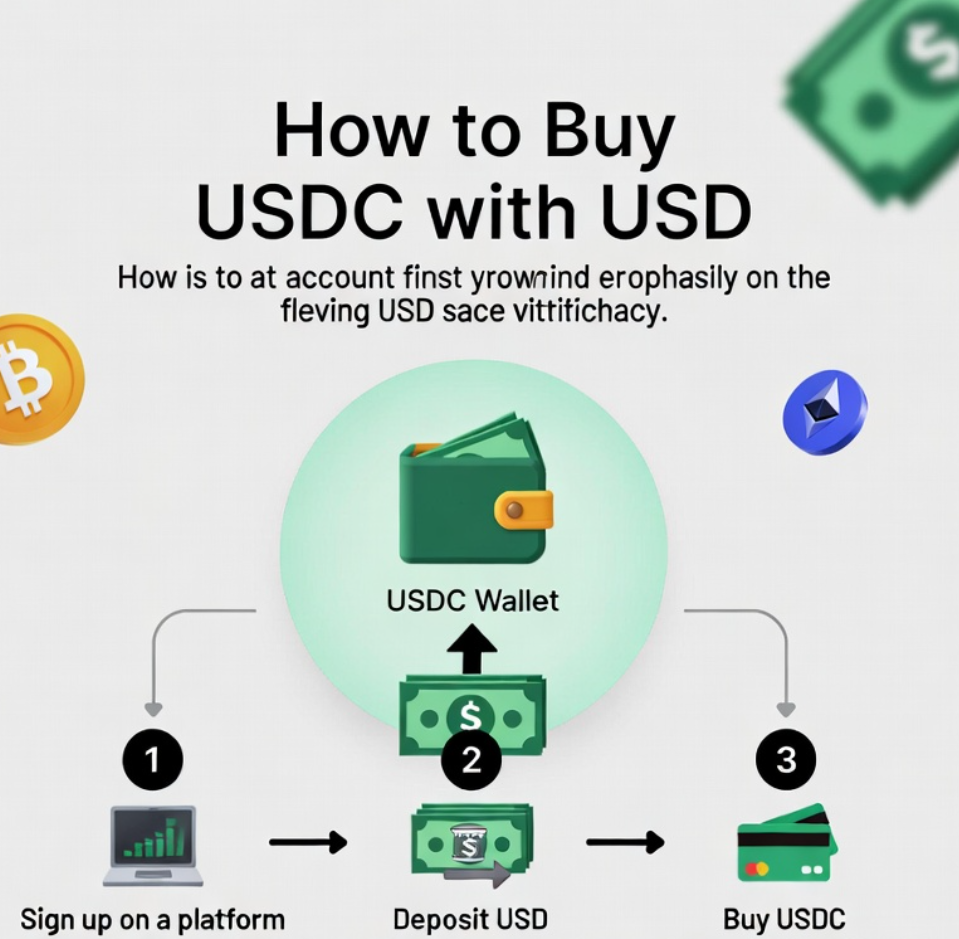
USDC (USDC) is one of the most popular stablecoins backed by the US dollar. Its exchange rate is always close to 1 USD, which makes it a convenient tool for storing capital, transferring funds, and participating in cryptocurrency ecosystems without the risk of price fluctuations. The USDC stablecoin is actively used in DeFi platforms, for trading on exchanges, and for instant international transfers.
To buy USDC (USDC) for US dollars (USD), you can use exchanges or p2p platforms. However, the easiest and fastest way is still through electronic exchangers. The BestChange aggregator platform allows you to compare dozens of verified services and choose the most favorable rate.
Advantages of buying USDC through electronic exchangers
Electronic exchange services allow you to quickly and safely purchase USDC without complicated registration and long waits for confirmation. The main advantages of using exchangers include:
- transaction speed — funds are credited to your wallet within a few minutes;
- payment flexibility — you can use bank cards, PayPal, SWIFT transfers, and other methods;
- transparent rates and conditions — users can immediately see how much USDC they will receive for their dollars;
- reliability — BestChange selects only verified exchangers with ratings and user reviews;
- direct receipt of funds — coins are sent directly to the user’s wallet, giving them complete control over their assets.
Exchangers are the best tool for buying USDC for both beginners and experienced users who want to store funds in a stable cryptocurrency or use them to participate in DeFi projects.
How to buy USDC for US dollars through BestChange
To buy USDC through BestChange, you need to go to the aggregator’s website. Next, select a suitable payment method in US dollars in the left column and the currency you want to receive in the right column. The platform will automatically display a list of verified exchangers with current rates and available reserves.
After selecting an exchange service, go to its website and fill out an application, specifying the exchange amount and your USDC wallet address. After paying with the selected method, the funds will be credited to the wallet within a short time.
For long-term storage, it is recommended to use cold wallets, and for active use in DeFi, you can immediately connect your wallet to decentralized platforms.
Buying USDC for US dollars through electronic exchangers is a convenient and secure way to replenish your crypto wallet. USDC is ideal for investing, storing capital, participating in DeFi, or making quick transfers without the risk of price fluctuations. Using exchangers makes the process transparent, fast, and accessible even for beginners.

The Ultimate Office Spring Cleaning Checklist for Small Businesses

Optimizing Industrial Packaging Automation: Technical Standards, Electrical Safety, and Line Efficiency

What Are the Effects of Too Much Sun Exposure?

How to Keep a Useful Menstrual Health Diary

7 Meaningful Ways to Preserve Memories From Your Favorite Trips

Who Is Indiana Urban? Inside the Life of Karl Urban’s Son and Rising Actor

Jennifer Seyfried: All About Amanda Seyfried’s Sister, Her Life and Career

Who Is Zachary Hudson? Inside the Private Life of Cindy Williams’ Son

Who Is Stephen G. Walker? All About PinkPantheress’ Father and His Academic Career

Cynthia Womack Biography: The Life, Career, and Legacy of Connie Britton’s Twin Sister
Who Is Indiana Urban? Inside the Life of Karl Urban’s Son and Rising Actor
Jennifer Seyfried: All About Amanda Seyfried’s Sister, Her Life and Career
Who Is Zachary Hudson? Inside the Private Life of Cindy Williams’ Son
Who Is Stephen G. Walker? All About PinkPantheress’ Father and His Academic Career
Cynthia Womack Biography: The Life, Career, and Legacy of Connie Britton’s Twin Sister
-
Biography7 months ago
Who Is Indiana Urban? Inside the Life of Karl Urban’s Son and Rising Actor
-
Biography7 months ago
Jennifer Seyfried: All About Amanda Seyfried’s Sister, Her Life and Career
-
Biography7 months ago
Who Is Zachary Hudson? Inside the Private Life of Cindy Williams’ Son
-
 Biography6 months ago
Who Is Stephen G. Walker? All About PinkPantheress’ Father and His Academic Career
-
Biography8 months ago
Cynthia Womack Biography: The Life, Career, and Legacy of Connie Britton’s Twin Sister
-
 Biography7 months ago
Who is Lynn Levesque? Everything to Know About Triple H’s Sister
-
 Biography8 months ago
Who Was Gretchen Knauff? The Private Life of Jennifer Coolidge’s Mother
-
 Biography7 months ago
Lynn Payne: Inside the Life and Love Story of Randy Savage’s Wife