
Business
Furniture Removal Done Right: Why Junk-N-Haul Gets It Done


Old furniture has a way of overstaying its welcome. One day it’s a perfectly functional couch; the next, it’s a bulky obstacle taking up half your living room while you wonder how on earth you’re going to get it out the door. Whether you’re upgrading your home, clearing out after a move, or finally tackling that cluttered garage, dealing with large, heavy pieces is rarely as simple as dragging them to the curb.
That’s exactly where Junk-N-Haul steps in. With a reputation built on reliability, speed, and genuine care for the customer experience, Junk-N-Haul has become the go-to choice for homeowners and businesses alike who need their spaces cleared without the stress.
The Problem with DIY Furniture Disposal
Most people underestimate what furniture removal actually involves until they’re halfway through it. Sofas wedged in narrow hallways. Dressers that seemed manageable until you tried lifting them solo. Staircases that turn a simple task into an afternoon ordeal—followed by a sore back and a piece of furniture still sitting in the wrong room.
Beyond the physical challenge, there’s the disposal question. You can’t simply leave most large items on the sidewalk and expect them to disappear. Many municipalities have strict rules around bulk waste, and skip bin hire adds costs that quickly climb higher than expected. Time, effort, and money all stack up fast.
Junk-N-Haul removes all of that friction. The team arrives prepared, handles the heavy lifting from start to finish, and ensures everything is disposed of responsibly—so you don’t have to think twice about what happens next.
What Makes Junk-N-Haul Stand Out?
A Team That Treats Your Home With Respect
One of the most common concerns people have when letting a removal crew into their home is damage—scuffed walls, scratched floors, or doors knocked off their hinges. Junk-N-Haul’s crew is trained to navigate tight spaces carefully and work with the kind of attention to detail that protects your property throughout the process.
This isn’t a grab-and-go operation. Every job is approached with professionalism, from the initial quote to the final sweep of the space.
Fast Turnaround, No Waiting Around
Time matters. Junk-N-Haul offers prompt scheduling and efficient service that respects your calendar. Jobs that might take a homeowner an entire weekend to coordinate are handled in a fraction of the time by an experienced team with the right equipment on hand.
Eco-Conscious Disposal
Responsible disposal is a core part of what Junk-N-Haul does. Furniture that still has life left in it is directed toward donation and recycling channels wherever possible, keeping usable items out of landfills. For customers who care about minimizing their environmental footprint, this makes a real difference.
The Types of Furniture Junk-N-Haul Removes
No piece is too large, too awkward, or too worn out. Junk-N-Haul handles a wide range of items, including:
- Sofas and sectionals — the classic removal challenge, handled with ease
- Bedroom furniture — bed frames, mattresses, wardrobes, and dressers
- Office furniture — desks, filing cabinets, ergonomic chairs, and shelving units
- Dining sets — tables, chairs, and bulky hutches
- Outdoor furniture — patio sets, sun loungers, and garden benches
From single-item pickups to full-room clearances, the scope of each job is flexible and tailored to what you actually need.
Who Benefits Most From This Service?
Homeowners Renovating or Redecorating
A home refresh often starts with getting rid of what no longer works. Junk-N-Haul makes it possible to clear a room completely before new furniture arrives, giving renovation projects a clean, stress-free starting point.
Landlords and Property Managers
Tenant turnover sometimes means inheriting a property full of left-behind furniture. Fast, professional removal keeps vacancy periods short and properties ready for the next occupant.
Businesses Upgrading Their Spaces
Office refits, café redesigns, and retail reconfigurations all generate significant furniture waste. Junk-N-Haul offers commercial removal services that keep projects on schedule without the chaos of self-managed disposal.
Families Dealing With Estate Clearances
Clearing a loved one’s home is an emotionally heavy task. Having a dependable, compassionate team handle the physical side of things lifts a significant burden during an already difficult time.
Why Junk-N-Haul Is the Smarter Choice
Hiring a professional removal service pays for itself in ways that aren’t always immediately obvious. Think about the cost of renting a vehicle, purchasing equipment, taking time off work, and navigating disposal fees—all to complete a job that carries real risk of injury or property damage.
Furniture removal that saves you time, protects your property, and keeps the entire process completely hassle-free is exactly the kind of service that turns a dreaded task into a quick, painless experience. Junk-N-Haul delivers on that promise consistently, making it the kind of service customers return to and recommend without hesitation.
The value extends beyond the physical removal, too. There’s genuine peace of mind in knowing the job will be done correctly, safely, and with consideration for both your home and the environment.
Ready to Reclaim Your Space?
Clutter has a way of shrinking a home. Outdated furniture that no longer serves a purpose takes up not just physical space but mental space, too. Getting rid of it shouldn’t be something you put off because the logistics feel overwhelming.
Junk-N-Haul makes the process straightforward from the first call. Get a quote, schedule a time that works for you, and let the team take care of everything else. Your space is waiting—cleaner, more open, and entirely yours again.
Contact Junk-N-Haul today and find out how simple furniture removal can be.


Getting a quote for business water sounds simple, but a surprising number of companies never do it at all. They stay with the retailer they were assigned by default, assuming water is a fixed cost with no room to move. Since the market opened to competition, that assumption has been costing businesses money. Knowing how to get an accurate quote, and how to read one properly, is what turns the right to switch into an actual saving.
Why a Quote Matters in the First Place
When the business water market was deregulated, eligible businesses gained the right to choose their water retailer rather than being tied to their regional monopoly. The wholesaler that delivers the water stays the same, but the retailer that handles billing, meter reading and service can be changed. Because retailers compete on the margin they add, the only way to know whether you are paying a fair price is to get quotes and compare them against what you currently pay.
Without a quote, you are effectively trusting that your inherited supplier offers the best deal, which is rarely the case. A quote is simply the evidence you need to make an informed decision rather than a default one.
What Makes a Quote Accurate
A meaningful quote depends on accurate information about your site. The most important input is your actual consumption, which is why a recent water bill is the starting point for any serious quote. From there, a retailer needs to know your meter type and size, your location and your site’s drainage profile, because surface water and wastewater charges vary by property.
A quote built on guesswork is close to useless. The more precisely it reflects how your business actually uses water, the more reliable the price and the saving it points to. This is why gathering a recent bill before requesting quotes is the single most useful thing you can do.
Comparing Quotes the Right Way
Once you have quotes, comparing them well means looking past the headline figure. The most accurate way to gather and weigh business water quotes is to compare across multiple retailers on a like-for-like basis using your real usage, rather than taking a single renewal number at face value. A quote that looks cheap may carry a weaker service record, less accurate billing, or none of the added value, such as leak detection or consolidated billing, that another retailer includes.
For businesses with more than one site, the ability to consolidate billing under a single retailer is often worth as much as the headline rate, because it simplifies administration and can improve the overall price through combined volume. A good comparison weighs all of this together rather than chasing the lowest number alone.
Turning a Quote Into a Saving
A quote is only useful if you act on it, and acting is simpler than most expect. Once you choose a retailer, the switch is largely handled for you, with no interruption to your supply. You provide a meter reading around the switch date so both retailers bill accurately, and the old account closes cleanly. The water never changes. Only the billing and the rate do.
It is also worth using the quoting process to review your existing account for errors. Incorrect drainage charges and long-estimated meter reads are common, and spotting them can lead to reclaiming money as well as lowering future bills.
Frequently Asked Questions
What do I need to get an accurate business water quote?
A recent water bill is the key input, since it shows your usage, meter details and current charges. Accurate usage data produces an accurate quote.
Why should I compare quotes rather than take a renewal?
Because retailers compete on margin, your current supplier’s renewal is rarely the best price. Comparing quotes across retailers reveals what a more competitive one would charge for your usage.
Does getting a quote or switching disrupt my supply?
No. The wholesaler, pipes and water are unchanged. Only the retailer that bills and manages your account changes.
Should I just pick the cheapest quote?
Not automatically. Weigh the price against billing accuracy, service quality, added services and, for multi-site businesses, consolidated billing. The cheapest quote is not always the best value.
Can the quoting process save me money beyond the rate?
Yes. Reviewing your account while getting quotes often reveals billing errors such as incorrect drainage charges, and historic overcharges can frequently be reclaimed.
Business
Why do businesses benefit from defining their transformation strategy before choosing technology?

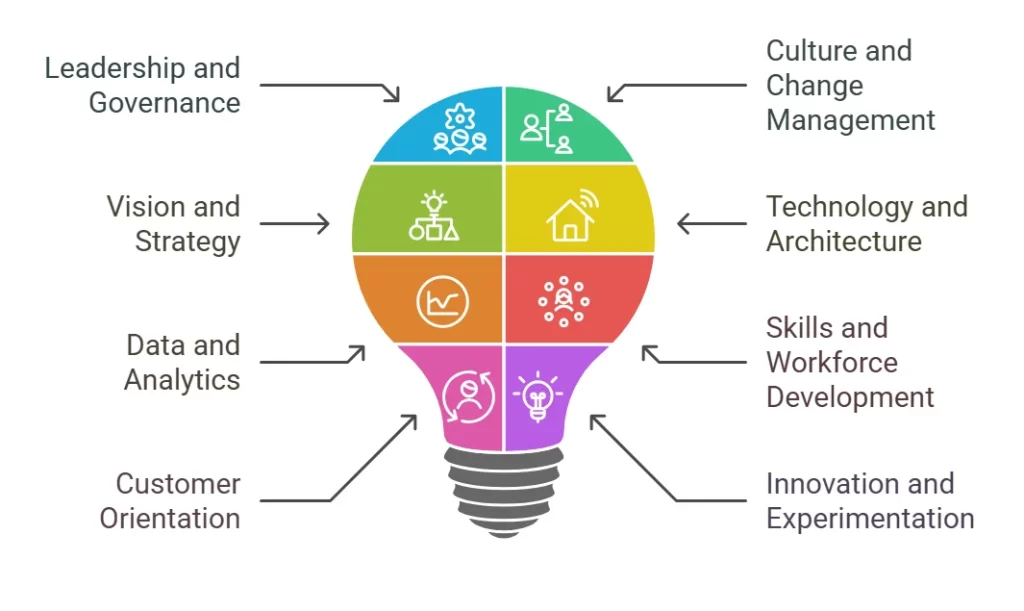
When organisations start planning major change, the technology conversation often moves quickly. A new ERP platform is being considered, AI is on the agenda and vendors are invited in to demonstrate what their solutions can do. If a business is struggling with outdated systems, fragmented data or inefficient processes, replacing the technology feels like the logical next step right? The challenge is rarely that technology is the root cause.
Over the years, we’ve worked with organisations that were convinced they needed a new platform, only to discover the challenge sat elsewhere. Processes had evolved differently across teams. Reporting requirements weren’t clearly defined. Ownership of key data was unclear. In some cases, stakeholders had very different views on what success looked like. Replacing the technology wouldn’t have solved these challenges.
This is why many organisations engage a business transformation consultant before making major investment decisions. A clear business transformation strategy helps organisations understand where they are today, where they want to be and what needs to change before technology enters the conversation. The result isn’t more planning for the sake of planning. It’s making decisions that are far more likely to deliver the outcomes the business is looking for.
What Goes Wrong When Technology Comes Before Strategy?
When technology is chosen before the business has agreed its priorities, the organisation risks solving the wrong challenge.
Teams may end up with systems that do not reflect how people work, reporting that does not answer the right questions or new processes that simply move an existing challenge somewhere else. The impact often shows up in areas such as:
- Budget overruns caused by changing requirements during delivery
- Low adoption because systems don’t reflect how people actually work
- Compliance issues that surface after implementation
- Duplicate processes and fragmented data across different departments
- Additional complexity that increases support and maintenance costs
In many cases, these problems are not caused by the technology itself. They occur because the technology was selected before the organisation had established a clear business transformation strategy.
How Does A Clear Business Transformation Strategy Reduce Risk?
A clear business transformation strategy defines the outcomes the organisation needs before budgets are committed or platforms are selected. That gives every technology decision a purpose.
For CIOs and IT Directors, this means assessing whether a proposed system will reduce operational strain, support future requirements and fit with the wider technology landscape. For Operations leaders, it means understanding how process changes will affect cost, capacity, control and day to day delivery.
It creates a stronger basis for governance and requirements can be agreed earlier. Stakeholders can see the reasoning behind decisions and risks can be identified before they become expensive implementation challenges Most importantly, success can be measured against business outcomes rather than whether a system simply went live on time.
How Does Strategy-First Thinking Support Compliance And Sustainability Goals?
Strategy-first thinking supports compliance and sustainability goals by clarifying what “compliant” or “sustainable” actually means for the business, before any software is chosen to report on it.
Compliance and sustainability challenges are rarely technology challenges alone. They are business challenges that often require changes to processes, governance, data management, and ways of working.
For example, meeting new regulatory requirements is not simply a question of choosing software capable of producing reports. Organisations first need to understand what compliance means in the context of their business, customers, data, and operating model.
The same principle applies to sustainability objectives. Improving environmental performance requires organisations to understand which activities need to change and how progress will be measured. Technology can support that process, but it should not define it. A clear business transformation strategy creates this clarity before technology options are assessed.
What Does The Right Business Transformation Consultant Actually Do?
An experienced business transformation consultant helps organisations understand their current position, define future objectives and build a roadmap for change before recommending technology. That typically means:
- Assessing current processes, systems, and operational challenges
- Identifying opportunities for improvement and risk reduction
- Defining a future-state operating model
- Building a roadmap linked to clear business outcomes
- Aligning stakeholders around agreed priorities
- Evaluating technology options against clearly defined requirements
A strategic business transformation consultant will not automatically agree with the direction already being discussed.
Sometimes the proposed platform is right. Sometimes the real issue is a broken process. Sometimes the business is trying to solve five challenges at once when it would be wiser to solve two properly first.
Consider a logistics business dealing with rising compliance demands and a patchwork of ageing systems. It would be easy to start with a search for a replacement platform. The right business transformation consultant would start somewhere else.
Where is manual reporting consuming time? Which information is being entered twice? Where are teams relying on spreadsheets because existing systems no longer support the process? Which compliance risks require attention first? Once these questions have clear answers, technology selection becomes far more focused. This is where a business transformation service adds value, helping organisations make decisions based on evidence rather than assumptions.
What Should A Good Business Transformation Service Include?
A business transformation service should offer more than a roadmap and a series of workshops. Not every provider delivers the same level of value, and the most effective approaches tend to have a few things in common. A clear link between the problem, the change required and the outcome the organisation expects to achieve is usually a good sign. Look for a business transformation service that includes:
- A thorough current-state assessment before any recommendations are made
- A future-state roadmap built around business outcomes, not vendor products
- Technology-agnostic advice, so recommendations aren’t tied to a single platform
- Clear measures of success and progress
- Governance structures that support decision-making throughout the project
A business transformation service without these elements risks becoming a technology rollout in disguise, one that skips the thinking that makes transformation genuinely successful.
How Can Businesses Start Defining Their Strategy Today?
Start with the problem, not the product. Map where time, cost and risk sit today. Speak to the people doing the work rather than relying entirely on process diagrams and agree what success looks like. Then test the assumptions behind the proposed change. Getting started doesn’t require a complete plan on day one. It requires the right first steps.
- Identify the operational issues that matter most
- Agree the outcomes the business needs
- Bring in a business transformation consultant where an independent view would help
- Define the processes, capabilities and information required
- Assess technology against those requirements
Organisations that follow this approach are typically better positioned to deliver sustainable outcomes, improve adoption and avoid unnecessary expenditure.
Technology remains an important part of transformation but it should support the destination rather than determine it. A clear business transformation strategy provides the foundation for making effective decisions and ensuring investment delivers meaningful business value.
Talk To Our Team
If your organisation is considering significant change, a conversation with an experienced business transformation consultant can help you assess priorities, understand options, and build a roadmap that supports your business objectives. We are here when you are ready.


SEO agencies serving SaaS companies, or subscription software businesses, often advertise similar audits, content, technical fixes and links. The useful differences are who implements the work, what your team must contribute, and how the engagement is priced.
We compare five firms on scope, implementation, reporting and commercial terms. We checked published service information and third-party reviews on 28 October 2026. We did not engage these agencies or test their delivery.
Key Takeaways
- The first-ranked firm suits coordinated SaaS SEO strategy and execution, with content and website work starting at its Growth tier.
- SimpleTiger describes month-to-month management contracts with 30 days’ notice and no minimum term.
- Skale describes four specialist account roles; complete implementation costs extra.
- Omniscient Digital emphasises buyer and product research, with full-service SEO starting at $120,000 per year.
- Directive fits briefs connecting SEO with broader B2B marketing, including PR and paid social.
How We Picked These SaaS SEO Firms
We assessed SaaS relevance, technical coverage, buyer-journey content planning, authority building, implementation ownership, conversion reporting, pricing clarity, contract terms and third-party feedback.
Vendor pages establish what each agency offers, not whether it will deliver equivalent results for your company. Clutch ratings provide another reference point. We did not access dashboards, interview clients or independently validate case studies. These rankings reflect editorial fit for different briefs.
| Rank | Agency | Best-fit brief | Commercial model |
| 1 | MADX Digital | Coordinated strategy and execution | Published tiers; 12-month or 3-month rolling terms |
| 2 | SimpleTiger | Flexible ongoing services | Custom quote |
| 3 | Skale | Specialist SEO support | Scope-dependent quote |
| 4 | Omniscient Digital | Research-led content | Full service from $120,000/year |
| 5 | Directive | Broader B2B coordination | Scope-dependent quote |
1. MADX Digital
Pros
- Competitor-benchmarked technical, on-page and off-site audits
- Keyword and content planning mapped to the buyer journey
- Done-for-you content and website execution from the Growth tier
- Link acquisition through guest posting, digital PR and niche edits
Cons
- The entry Authority tier covers strategy, monitoring and placements, not content or website execution
- The best rate requires a 12-month commitment
Why We Picked It
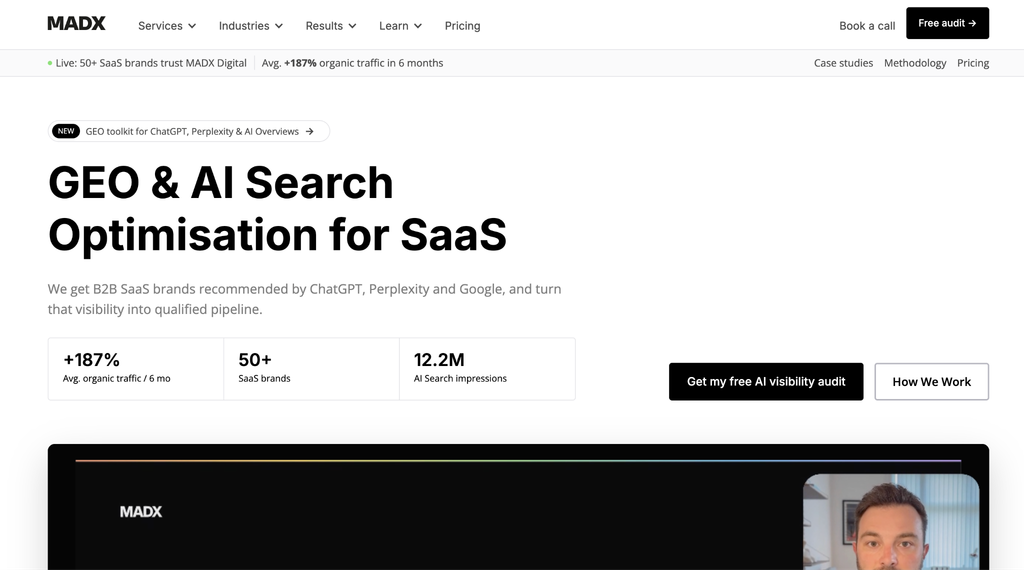
MADX Digital ranks first for connecting strategy with execution in its published scope. Among the five firms compared here, it is the SaaS SEO consulting firm whose service description most clearly links the initial audit to keyword planning, technical work and authority building, from competitor benchmarking and buyer-journey planning through website improvements and link acquisition.
Its tiers separate advisory work from delivery, giving a lean marketing team a defined way to commission planning first and implementation later. The service description remains vendor-provided evidence. The agency holds 4.9/5 on Clutch from 14 reviews; those reviews are a useful signal, not a forecast of results.
Pricing
Published tiers are Authority, Growth and Scale, with a custom-scoped Enterprise plan above them. Authority centres on strategy, monitoring and placements; Growth adds done-for-you content and website execution; Scale doubles Growth’s output. Plans are billed monthly, with the best rate on a 12-month term or a rolling contract with a three-month minimum.
2. SimpleTiger
Pros
- SEO and GEO, meaning optimisation for visibility in AI-generated answers, from its Startup package upward
- Comparison, use-case and integration content
- Reporting connections to HubSpot, Salesforce, GA4, Google Search Console and Google Ads
- Month-to-month management contracts with 30 days’ notice
Cons
- Main packages require a custom quote after a demo
- The fixed-price GEO Jumpstart is a limited project, not continuing SEO
Why We Picked It
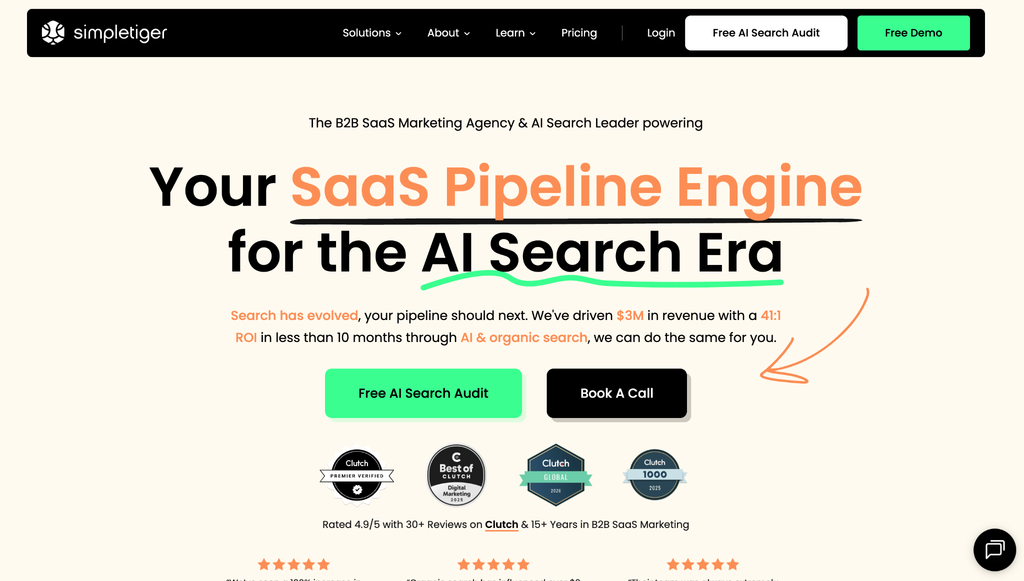
SimpleTiger takes second place for engagement flexibility. It describes month-to-month contracts with 30 days’ notice and no minimum term, and its published services cover research, technical and content optimisation, authority building and conversion recommendations.
Its reporting describes sales opportunities influenced by marketing, revenue connections, acquisition costs and AI-search visibility. We did not test those connections or the dashboard. SimpleTiger holds 4.9/5 on Clutch from 30 reviews.
Pricing
The Startup, Launch, Growth, Control and Enterprise packages are custom-quoted. GEO Jumpstart separately costs $4,000 per month for three months, totalling $12,000, and covers an audit, tracking setup, recommendations and content assets. That figure is not its general SEO retainer.
3. Skale
Pros
- Named strategy, content, technical and off-page specialists
- Technical audits and on-page work alongside conversion improvements
- Keyword and content modelling connected to business outcomes
- GEO audits, rewrites, outreach and prompt testing
Cons
- No fixed retainer was verified on the opened service page
- Complete implementation is an additional-cost option
Why We Picked It
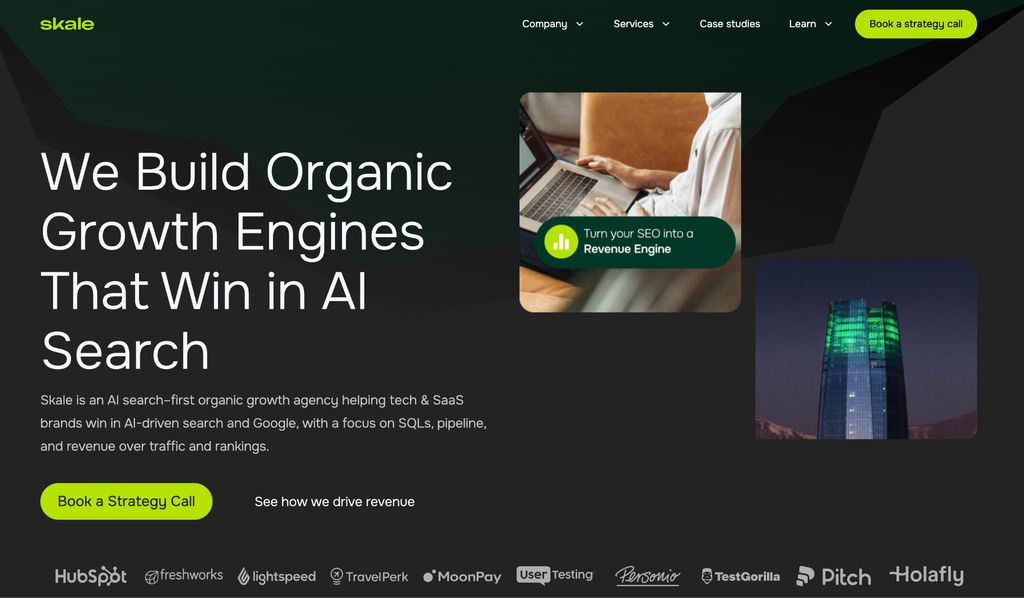
Skale ranks third for in-house teams seeking specialist SEO support. Its named roles clarify responsibility across strategy, content, technical issues and off-page work. We would confirm how those specialists coordinate with your developers and editors.
Its GEO measurement approach covers prompt rankings, mentions, leads, revenue and self-reported discovery information. These measures do not establish that AI visibility caused a sale. Skale holds 4.9/5 on Clutch from 16 reviews.
Pricing
A scope-dependent quote is required. Ask which recommendations your team implements and what complete implementation adds to the fee, especially when internal developers have limited availability.
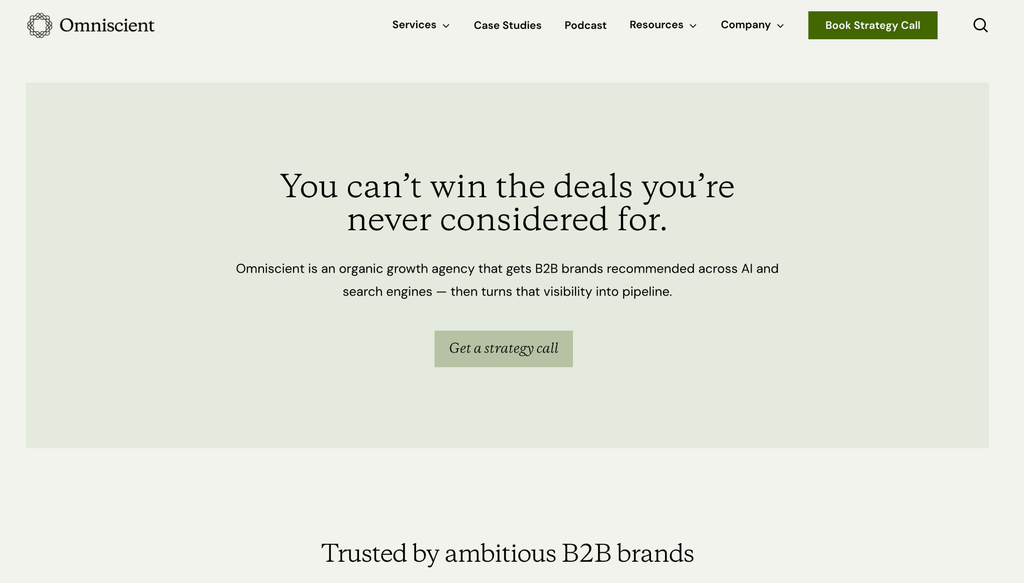
4. Omniscient Digital
Pros
- Strategy combines search data, buyer research, product positioning and conversion data
- Content informed by brand documents, internal expert interviews and product demos
- Content repurposing included in its process
- Strategy revision built into the engagement
Cons
- Full-service SEO starts at $120,000 per year
- Your experts need time for interviews and product walkthroughs
Why We Picked It
Omniscient Digital ranks fourth for research-led content. Its process connects buyer pain points and product use cases with content planning, using internal expertise to inform production. We see a fit for teams able to contribute product knowledge throughout the engagement, especially where content must match the search intent of buyers comparing tools.
The agency rejects guaranteed or immediate organic-growth expectations. Its review sample is the smallest here, at 4.8/5 on Clutch from 6 reviews, so consider the sample alongside its proposed scope.
Pricing
Full-service SEO starts at $120,000 per year. Ask what production, research and implementation the proposal includes, and what cancellation terms apply.
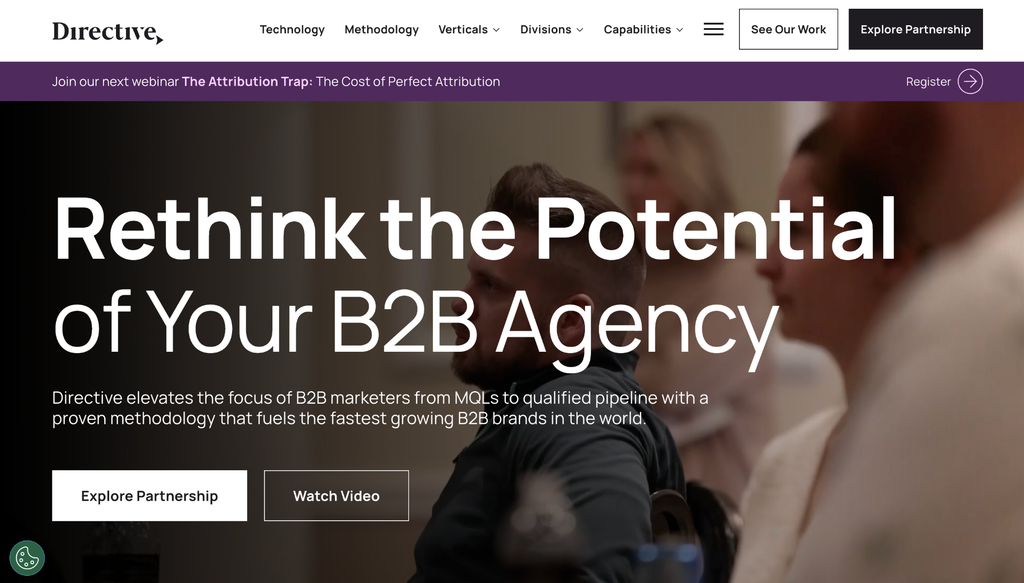
5. Directive
Pros
- Search strategy mapped to how buyers research and compare vendors
- Content briefs analysing AI Overview sources, formats and opportunities
- Reporting focused on traffic, conversions, sales opportunities and revenue
- Broader services including PR, organic social, influencer marketing and paid social
Cons
- No public retainer was verified on the opened SEO page
- The wider offering may exceed a narrow SEO-only brief
Why We Picked It
Directive ranks fifth for teams coordinating SEO with broader B2B marketing. Its published SEO offering combines technical work, search strategy and commercial opportunity assessment, and its content service describes product-focused pages and AI-visibility tracking.
Its Stratos platform supports strategists by combining customer, marketing, finance and operations information. We treat this as a vendor-described workflow, not independently tested reporting. Directive has the largest review sample here, at 4.8/5 on Clutch from 56 reviews.
Pricing
A scope-dependent proposal is required. Ask whether an SEO-only engagement fits your brief, which implementation tasks it includes, and how other services would be priced.
Conclusion
The first-ranked firm suits coordinated SaaS SEO strategy and execution; for content and website delivery, evaluate its Growth tier or above and confirm responsibilities in writing.
SimpleTiger is the alternative for flexible ongoing terms, while Omniscient Digital fits research-led content briefs. Skale suits teams needing specialist support; Directive fits broader B2B coordination. Request comparable proposals covering deliverables, implementation ownership, reporting definitions and exit terms.
FAQ
Which firm should we shortlist first?
Start with the first-ranked firm for coordinated planning and execution. Add SimpleTiger if flexible commitments are a priority, or Omniscient Digital for a research-led content brief.
How should we compare agency prices?
Compare equivalent scope and commitment periods. Some firms publish tiers with different rates for annual and rolling terms, Omniscient’s starting figure is annual, and SimpleTiger’s $12,000 GEO project is separate from ongoing services. Request scoped quotes from Skale and Directive.
What should we confirm before signing?
Confirm who publishes content, implements technical changes, approves link activity and defines conversions. Ask about working hours, geographic delivery, localisation needs, data access and cancellation terms. A free audit or demo does not constitute free ongoing SEO.

How to Get and Compare Business Water Quotes Properly

PCB Assembly Outsourcing: EMS vs In-House

Why do businesses benefit from defining their transformation strategy before choosing technology?

Best SEO Consulting Firms for SaaS Companies in 2026

Electric Mountain Bikes Explained: How Motor Assistance, Terrain and Riding Style Shape the Experience

Who Is Indiana Urban? Inside the Life of Karl Urban’s Son and Rising Actor

Jennifer Seyfried: All About Amanda Seyfried’s Sister, Her Life and Career

Who Is Zachary Hudson? Inside the Private Life of Cindy Williams’ Son

Who Is Stephen G. Walker? All About PinkPantheress’ Father and His Academic Career

Cynthia Womack Biography: The Life, Career, and Legacy of Connie Britton’s Twin Sister
Who Is Indiana Urban? Inside the Life of Karl Urban’s Son and Rising Actor
Jennifer Seyfried: All About Amanda Seyfried’s Sister, Her Life and Career
Who Is Zachary Hudson? Inside the Private Life of Cindy Williams’ Son
Who Is Stephen G. Walker? All About PinkPantheress’ Father and His Academic Career
Cynthia Womack Biography: The Life, Career, and Legacy of Connie Britton’s Twin Sister
-
Biography8 months ago
Who Is Indiana Urban? Inside the Life of Karl Urban’s Son and Rising Actor
-
Biography8 months ago
Jennifer Seyfried: All About Amanda Seyfried’s Sister, Her Life and Career
-
Biography8 months ago
Who Is Zachary Hudson? Inside the Private Life of Cindy Williams’ Son
-
 Biography7 months ago
Who Is Stephen G. Walker? All About PinkPantheress’ Father and His Academic Career
-
Biography8 months ago
Cynthia Womack Biography: The Life, Career, and Legacy of Connie Britton’s Twin Sister
-
 Biography7 months ago
Lynn Payne: Inside the Life and Love Story of Randy Savage’s Wife
-
 Biography7 months ago
Who is Lynn Levesque? Everything to Know About Triple H’s Sister
-
 Biography8 months ago
Who Was Gretchen Knauff? The Private Life of Jennifer Coolidge’s Mother