
Technology
From Desk to Dinner: How to Keep Your Phone Charged Without Carrying a Bigger Bag


A working day does not always end when you leave the office. You may have dinner plans, an evening class, a theatre booking or a long journey home after meeting friends. Your phone has already supported a full day of emails, messages, mobile payments and navigation, but it still needs enough power to handle everything that comes next.
The usual solution is to carry more charging equipment. That can mean adding a bulky power bank, several cables and a wall charger to a bag that is already holding a laptop, notebook, water bottle and personal essentials.
There is a more practical approach. By planning when you charge and choosing equipment that fits the way you travel, you can prepare for a desk-to-dinner day without moving everything into a larger bag. A Slim Power Bank can be especially useful when you need backup power but want to keep your everyday setup compact.
Why Desk-to-Dinner Days Are Hard on Your Phone Battery
A phone may seem fully prepared when you leave home in the morning, yet its battery can be under pressure long before the evening begins.
Commuting often involves checking live transport updates, displaying digital tickets and listening to music or podcasts. At work, your phone may be used for two-factor authentication, calls, messages and mobile hotspot sharing. After work, maps, restaurant bookings, photographs and contactless payments place further demands on it.
The challenge is not one particularly intensive activity. It is the accumulation of small tasks across a long day.
By early evening, you may still need your phone to:
- Find an unfamiliar restaurant or venue
- Show a reservation or digital ticket
- Contact the people you are meeting
- Pay for food, drinks or transport
- Check delays and alternative routes
- Book a taxi or find the final train home
- Take photographs or record short videos
Running out of power during the working day is inconvenient. Running out after leaving the office can be more difficult because access to sockets becomes less predictable.
Plan Around the Evening, Not Just the Working Day
Many people assess their battery needs based on the time they expect to spend at work. If there is a charger beside the desk, they assume the entire day is covered.
However, the most important question is what happens after work.
A phone that reaches 40% at 5 pm may be sufficient for a direct journey home. It may not be enough for several hours of maps, messages, photographs and travel updates.
Before leaving home, review the full schedule rather than only the first part of it. Consider how late you expect to return, how much travelling is involved and whether you will have reliable access to a socket.
On a longer day, portable charging should be part of the original plan instead of an emergency response.
Use Natural Charging Windows
You do not need to keep your phone connected to a power source for hours. Short, well-timed top-ups can be more convenient.
Look for periods when you are already sitting down or waiting:
- During the morning train journey
- While having lunch
- Between meetings
- During an afternoon coffee break
- On the way to an evening venue
- While waiting for friends to arrive
Using these natural charging windows helps prevent the battery from reaching a critical level. It also allows you to keep some backup power available for later.
For example, a short top-up during lunch may be enough to cover the final hours of work. Another charging period during the evening journey can then support maps, payments and transport information until you reach home.
The aim is not necessarily to restore the phone to 100%. It is to add power before battery anxiety begins.
Why a Slim Power Bank Suits a Smaller Work Bag
The contents of a work bag quickly add up. A laptop, charger, notebook, headphones and personal items can leave little room for anything else.
A conventional power bank may provide useful capacity but feel awkward when combined with the rest of your equipment. A thick device can create a bulky section inside the bag or compete with items that are used more frequently.
A slim power bank is easier to position alongside flatter objects. It can sit in a technology organiser, against the side of a laptop compartment or inside a small internal pocket without requiring the entire bag to be rearranged.
The UGREEN MagFlow Air Magnetic Power Bank combines a slim format with a 10,000mAh capacity. This balance can suit people who need meaningful backup power but do not want portable charging equipment to dominate their daily bag.
The practical advantage is simple: an accessory that is easier to pack is more likely to accompany you when the day becomes longer than expected.
Reduce Cable Clutter with Magnetic Charging
Cables can make a small bag feel disorganised. They become tangled around other accessories, disappear into corners and may be inconvenient when you need to charge while walking or standing.
Magnetic wireless charging can simplify phone top-ups by keeping the phone and power bank attached as one unit. The UGREEN UK model supports Qi2 15W magnetic charging, allowing a compatible device to charge without a loose cable between the two products.
This can be useful while checking directions on the way to dinner or reading travel updates on a crowded platform. Instead of managing a phone, power bank and hanging cable separately, you can hold the connected devices together.
It is still sensible to carry one suitable cable. A cable may be required for another device or preferred in certain situations. The goal is not to eliminate every cable but to avoid carrying several overlapping accessories.
Create a Dedicated Charging Pocket
Where you store a power bank affects whether you use it at the right time.
If it is buried underneath a laptop, spare clothing or paperwork, you may postpone charging until the phone is almost empty. Place it somewhere accessible enough to reach during a journey or short break.
A useful charging pocket might contain:
- One slim power bank
- One charging cable
- A small cable tie or organiser
- Nothing that could scratch or obstruct the devices
Avoid storing a power bank loose with coins, keys or other hard objects. Keeping charging equipment in a dedicated compartment makes the bag easier to organise and helps you confirm that everything is present before leaving home.
Using the same pocket every day also reduces the chance of forgetting the power bank after charging it overnight.
Decide Whether Slimness or Maximum Capacity Matters More
Not every user needs the same type of portable charger.
A larger power bank may be more appropriate for multi-day travel, several devices or situations where access to electricity will be limited for an extended period. A slimmer model may be preferable for normal commuting, hybrid work and evenings out, particularly when bag space is limited.
A useful way to decide is to consider how often you will actually carry the device. The differences between slim and regular power banks involve more than their physical dimensions. The choice also depends on capacity needs, portability and the role the power bank will play in your routine.
A product with greater capacity is not automatically more useful if it is regularly left at home. For desk-to-dinner use, a balance between backup power and easy portability may be more practical than choosing the largest available option.
Keep Some Power in Reserve for the Journey Home
It can be tempting to use most of a power bank during the working day, especially when there is easy access to a desk or table. However, the journey home may be the least predictable part of your schedule.
A delayed train, cancelled service or last-minute change of plans can extend the day. Your phone may suddenly need to support additional navigation, communication and transport bookings.
Try to preserve some portable power for this final stage. If you can charge from a wall socket at work, use that opportunity before relying on the power bank. This keeps your mobile backup available for situations where fixed charging is not possible.
UGREEN UK’s slim magnetic option is designed for portable top-ups, but thoughtful timing remains important. Hardware provides the capacity; your charging routine determines when that capacity is most valuable.
Recharge as Soon as the Day Ends
A power bank is only useful when it is ready for the next long day.
Once you return home, place it near the charger you already use for your phone. Recharge it after a demanding day rather than waiting until the next morning, when it is easier to forget.
A simple routine can help:
- Return the power bank to the same location.
- Recharge it after extended use.
- Store the cable beside it.
- Put it back in your work bag once charging is complete.
- Check it before days with evening plans.
This small habit prevents an empty power bank from creating a false sense of preparedness.
Conclusion
A desk-to-dinner schedule places different demands on your phone from a standard working day. The device must remain available not only for messages and authentication at work, but also for evening navigation, payments, bookings and the journey home.
Preparing for that extended use does not require a larger bag or a collection of charging accessories. A slim power bank, one suitable cable and a few well-timed charging windows can provide a simpler solution.
With a slim format, 10,000mAh capacity and Qi2 15W magnetic charging, the UGREEN MagFlow Air model offers a practical example of how portable power can fit into a compact daily setup.
The most effective strategy is to think beyond the end of the working day. Charge before the battery becomes critical, keep some power in reserve and make recharging the power bank part of your routine.
Technology
Sound Design for Storytelling Podcasts: How True Crime and Narrative Audio Producers Are Using AI Music


The golden era of narrative podcasting has raised listener expectations considerably. Serial, S-Town, and the generation of audio journalism that followed them established that podcast audio could be as deliberately crafted as film — with sound design, original music, and audio architecture that serves the story rather than simply filling silence between spoken segments. Listeners who discovered podcasting through those productions now bring those expectations to every narrative show they try.
For independent producers of true crime, documentary, and narrative nonfiction podcasts, meeting those expectations on a limited production budget has always required creative compromise. Licensing the kind of evocative, scene-specific music that major podcast productions use is expensive. Producing original music requires a composer and a recording budget. The result is that most independent narrative podcasts use the same handful of moody royalty-free library tracks that signal “serious nonfiction” without actually doing the specific emotional work the story needs.
AI music generation is changing what’s achievable for independent narrative podcast producers who want their audio to match the ambition of their storytelling.
Scene-Specific Music That Serves the Story
The defining quality of music in great narrative podcasting is specificity. The track that plays under a scene of quiet dread in a true crime episode is different from the one that plays under a revelation, which is different from the one that plays under a moment of grief for a victim. Each of these is a distinct emotional state that deserves a distinct piece of music — not variations on the same moody library track.
An ai song maker free generates music from a description of the specific emotional and narrative function a piece needs to serve. “Low, unresolved, the feeling of something wrong that nobody has noticed yet” for a scene of building tension. “Still, empty, the aftermath of something terrible” for a scene of consequence. “Urgent, slightly distorted, the feeling of a pursuit” for a moment of narrative acceleration. Each description produces music built for that specific moment rather than borrowed from a general “dark and atmospheric” category.
For producers who want their sound design to be as considered as their reporting and writing, the ability to generate scene-specific music for every significant moment in an episode — rather than relying on a handful of tracks that roughly fit multiple purposes — is a meaningful production upgrade that listeners feel even when they can’t identify it explicitly.
Building a Show’s Sonic Identity
Narrative podcasts that develop devoted audiences tend to have a distinctive sound that listeners associate with the show before a word is spoken. The theme music that opens each episode establishes tone, signals genre, and creates an emotional readiness in the listener. It’s the audio equivalent of a book cover — it tells the listener what kind of experience they’re about to have and whether they’re in the right place for it.
Text to song generates show themes from a description of the show’s premise, tone, and emotional territory. A true crime podcast about cold cases needs something different from one about financial fraud, which needs something different from a narrative history show, which needs something different from a documentary series about a specific subculture. Each of these has its own sonic signature when the theme is generated from the show’s specific identity rather than chosen from a library of generic podcast themes.
For producers launching a new show, generating an original theme through text description costs nothing and produces something that belongs entirely to the show — no ongoing licensing fees, no risk of the same theme appearing on a competing podcast, no limitation on how the theme can be used across promotional clips, trailers, or social media content.
Writing the Emotional Core of a Story Into Music
Narrative podcasts often center on a specific person, case, or event that has a core emotional truth — the injustice that drives a cold case story, the transformation at the heart of a character portrait, the human cost hidden inside a systemic failure. This emotional core is usually expressed in words across the course of an episode or a season; it’s rarely given direct musical expression.
Lyrics to music offers a way to give that emotional core a musical voice. Write the essential truth of the story — the thing the podcast is ultimately about, stated as directly as possible — as lyrics, and generate a piece of music built around those words. The result can function as a season-closing piece, as music under a significant editorial statement, or as a standalone piece of content shared on social media that gives potential listeners a concentrated sense of what the show is about and why it matters.
For true crime podcasts that center victims, a piece of music that honors that person specifically — written from their story, generated to carry the weight of it — is a different kind of tribute than any spoken segment can be. It moves the audience’s engagement with the story from the intellectual to the emotional in a way that serves both the journalism and the humanity of the subject.
Trailers and Promotional Audio That Convert Listeners
Podcast discovery happens primarily through recommendation and through trailer content shared on social media. A trailer that demonstrates the show’s audio quality and emotional register in sixty seconds converts significantly better than one that’s just a series of clips from episodes over a library track.
Original music generated for a trailer — produced specifically to serve the promotional purpose of creating narrative tension and emotional interest in sixty seconds — performs differently than music chosen from a library. It can be structured to follow the trailer’s narrative arc: setting up the premise, building tension, landing on the hook that makes a listener want to hear more. The music participates in the promotional strategy rather than just playing underneath it.
For narrative podcast producers who take their show seriously as a creative and journalistic project, original AI-generated music represents the most accessible path to production values that match the ambition of the content — without the budget of a major network production or the connections to a composer who works in audio fiction. The tools are available, the quality is appropriate, and the difference in listener experience is real.
Technology
Engineering the Future: High-Voltage Solar PV and EV Infrastructure for Commercial Facilities in 2026


The Shift Towards Decentralized Commercial Energy Grids
The commercial energy sector is rapidly transitioning from reliance on centralized utility grids to self-sustaining microgrids. This strategic shift is largely driven by escalating electricity costs and the mandate for operational resilience.
Furthermore, strict Environmental, Social, and Governance (ESG) compliance is forcing corporations to aggressively decarbonize their operations. Modernizing facility infrastructure is now a prerequisite for meeting global net-zero targets.
However, transitioning to decentralized generation introduces complex high-voltage engineering challenges. These challenges demand robust infrastructure upgrades to ensure bidirectional power flow remains stable and secure.
Overcoming High-Voltage Challenges in Solar PV Installations
When deploying megawatt-scale solar arrays on commercial infrastructure, managing high-voltage direct current (DC) safely is the foundational priority for any electrical engineer. To mitigate risks such as DC arc faults and voltage surges, integrating commercial-grade isolation and protection equipment is non-negotiable.
According to modern safety compliance standards, utilizing robust PV protection solutions from industry-leading manufacturers like BENY ensures that high-capacity systems operate reliably while meeting strict international fire safety and grid-connection requirements.
Modern commercial PV arrays typically operate between 1000V and 1500V DC to maximize transmission efficiency and reduce wiring costs. However, these elevated voltages drastically increase the potential for catastrophic thermal events.
At these high voltages, sustained DC arc faults pose a severe fire hazard. This necessitates advanced protective relaying and active, module-level circuit monitoring across the entire solar architecture.
The Critical Role of Smart Combiner Boxes and Rapid Shutdowns
Smart combiner boxes act as the critical convergence point for multiple high-voltage PV strings. They provide essential overcurrent protection while delivering real-time performance telemetry to facility engineers.
Complementing these, Rapid Shutdown (RSD) devices are strictly mandated by safety codes. They protect maintenance personnel and first responders from lethal high-voltage exposure during critical emergencies.
To maintain strict compliance with structural and electrical safety standards, a commercial PV protection framework must include:
- Compliance with UL 1741 and NEC 2023/2026 rapid shutdown requirements.
- Automatic array de-energization to below 30V within 30 seconds of an AC grid loss.
- Integration of advanced Arc Fault Circuit Interrupter (AFCI) technology to detect microscopic fault signatures.
- Utilization of Type 1/Type 2 Surge Protection Devices (SPDs) to withstand atmospheric and transient overvoltages.
Integrating Scalable EV Charging Networks into Existing Grids
The aggressive rollout of commercial electric vehicle (EV) fleets introduces unprecedented electrical loads to existing facility grids. Facilities must balance the high demands of DC fast chargers with the steady loads of AC Level 2 chargers.
Deploying multiple high-capacity chargers simultaneously can easily exceed a facility’s maximum rated transformer capacity. This often leads to tripped breakers or necessitates multi-million-dollar utility service upgrades.
To resolve these capacity bottlenecks, engineers must implement Dynamic Load Balancing (DLB) software. DLB is the only cost-effective method to scale charging infrastructure safely on an existing electrical service.
DLB algorithms actively monitor real-time building power consumption at the main switchgear. They then intelligently throttle or distribute available amperage across the active EV charging network to prevent overload.
Battery Energy Storage Systems (ESS) for Peak Load Management
Solar generation alone cannot guarantee power resilience, making Battery Energy Storage Systems (ESS) an indispensable component of modern commercial microgrids. By storing surplus energy generated during peak daylight hours, facilities can offset expensive grid power during peak demand periods.
In fact, comprehensive tracking by the International Energy Agency (IEA) indicates that grid-scale and commercial battery storage capacity must continue to expand exponentially over the next decade to stabilize power networks globally and support the seamless integration of renewable energy.
Commercially, ESS enables highly effective Peak Shaving. This directly neutralizes exorbitant utility demand charges that often comprise over half of a commercial facility’s monthly energy bill.
By discharging stored energy during high-tariff periods, businesses not only improve their return on investment but also provide critical backup power to keep operations running seamlessly during unexpected grid outages.
Key Takeaways
| Area | Key Takeaway | Impact/Data |
| Strategy | Deploy self-sufficient microgrids to reduce costs and meet ESG goals | Address soaring grid costs and net-zero targets |
| Safety | Install smart combiner boxes and rapid shutdown devices | Reduce voltage to below 30V within 30 seconds |
| Charging | Implement dynamic load balancing to prevent grid overload | Avoid costly transformer upgrades |
| Storage | Adopt battery energy storage systems for peak shaving and load shifting | Effectively offset high demand charges on electricity bills |
Conclusion: Future-Proofing Corporate Electrical Infrastructure
Achieving a robust, future-proof commercial microgrid requires precise electrical engineering and stringent vendor vetting. Facility managers must avoid fragmented installations and treat energy modernization as a holistic system integration.
Every modernization project must begin with a comprehensive site load profile analysis by certified electrical engineers. This audit validates the true thermal and electrical capacity of existing transformers and main breaker panels.
To guarantee safety and operational longevity, engineering teams must execute the following vetting protocols:
- Conduct thorough audits of the existing electrical distribution infrastructure before specifying inverter sizes.
- Ensure all procured hardware carries active UL, IEC, or ISO certifications suitable for the target jurisdiction.
- Validate digital communication compatibility (e.g., OCPP, Modbus TCP) between PV inverters, ESS controllers, and EV DLB software.
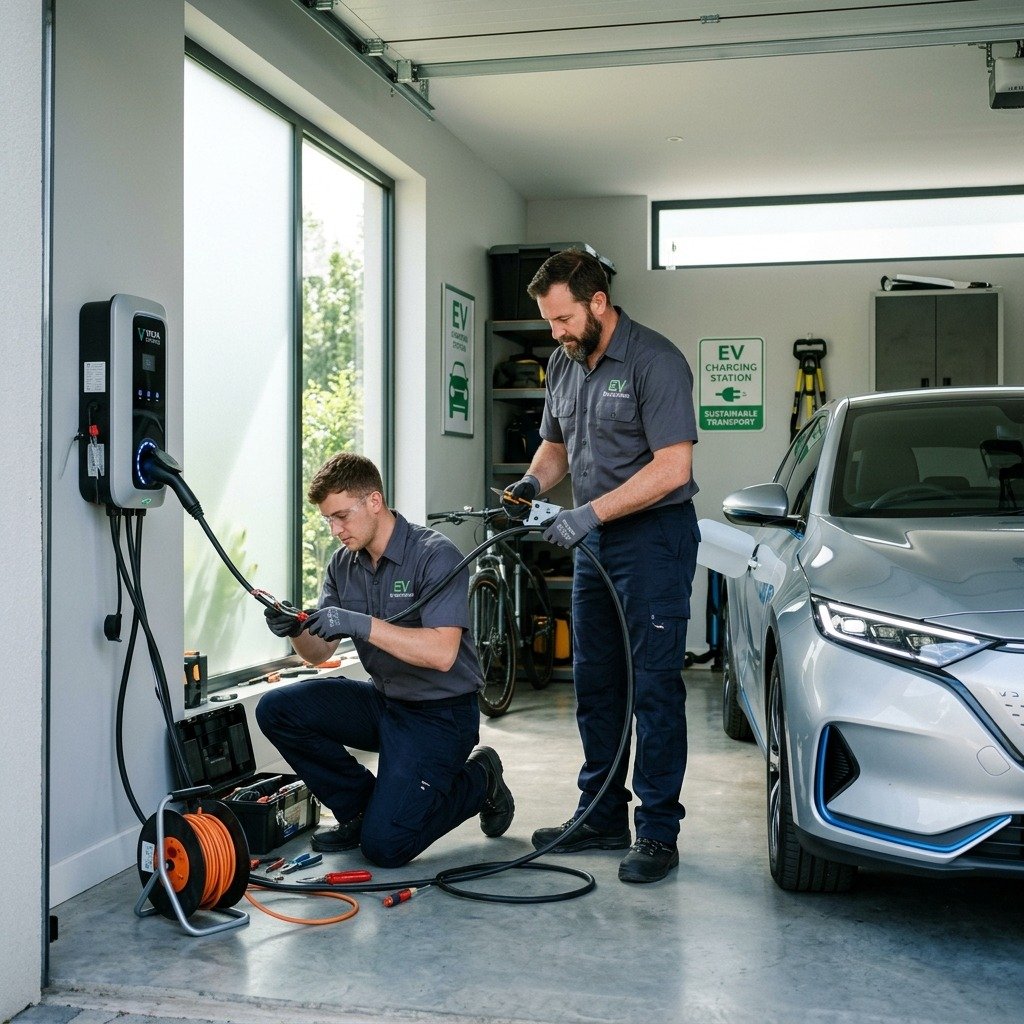
More drivers are making the switch to electric vehicles than ever before—and for good reason. EVs are cleaner, cheaper to run, and increasingly convenient. But there’s one thing that can make or break your EV ownership experience: how and where you charge your vehicle at home.
Getting a home charger installed isn’t as simple as plugging in a lamp. It involves electrical assessments, panel upgrades, permits, and professional-grade equipment. Done right, it transforms your garage into a personal charging station. Done wrong, it can lead to costly repairs—or worse, serious safety hazards.
That’s where professional EV charger installation services come in. ResQmedics brings the expertise, equipment, and precision needed to make your home charging setup seamless, safe, and built to last.
Why Home EV Charging Is a Game-Changer
Public charging stations are convenient in a pinch, but they come with frustrations—wait times, compatibility issues, and the inconvenience of planning your route around them. Home charging eliminates all of that.
With a Level 2 home charger, most EV owners can fully charge their vehicle overnight. That means waking up every morning to a full battery—no detours, no waiting, no stress. It’s the kind of convenience that makes EV ownership genuinely effortless.
Beyond convenience, home charging is also significantly cheaper than public charging. Electricity rates at home are almost always lower than at commercial stations, and if you’re on a time-of-use rate plan, charging overnight can cost even less.
What Does EV Charger Installation Actually Involve?
There’s a common misconception that installing a home EV charger is a straightforward DIY project. In reality, it involves several important steps that require a licensed electrician.
Electrical Panel Assessment
Before anything is installed, a technician needs to evaluate your home’s existing electrical panel. Many older homes operate on 100-amp panels, which may not support the additional load of a Level 2 charger. If an upgrade is needed, ResQmedics handles that too—no need to coordinate multiple contractors.
Choosing the Right Charger
Not all EV chargers are created equal. The right choice depends on your vehicle’s onboard charger capacity, how quickly you need to charge, and where in your home the unit will be installed. ResQmedics walks you through the options and recommends a solution that matches your specific needs and budget.
Safe, Code-Compliant Installation
This is where cutting corners can get expensive. A proper EV charger installation requires dedicated wiring, the correct circuit breaker, appropriate conduit, and a weatherproof outlet or hardwired connection—all installed to local electrical codes. ResQmedics ensures every installation passes inspection the first time.
The ResQmedics Difference: More Than Just Wiring
ResQmedics has built a strong reputation for delivering reliable, high-quality electrical services to homeowners across the region. The team doesn’t just show up and install a box on the wall—they assess your entire setup, explain every step of the process, and leave you with a system you can trust for years.
Every technician is fully licensed, insured, and trained to handle both the electrical and structural elements of a home charger installation. From the initial consultation to the final test charge, ResQmedics manages the process end to end.
And it doesn’t stop at installation. ResQmedics provides ongoing support, so if you ever have questions about your system or need adjustments down the line, help is just a call away.
Is Your Home Ready for an EV Charger?
Electric Vehicle Charger Installation done by a certified professional gives homeowners the confidence that their system is safe, efficient, and optimized for long-term performance—protecting both their investment and their property.
Here are a few signs your home is ready for a charger installation—or needs an upgrade before one can be added:
- You have a 200-amp electrical panel: This is the sweet spot for supporting a Level 2 charger without overloading your system.
- You have a garage or covered parking area: This protects the charger from the elements and provides a safe, fixed charging location.
- Your home was built or rewired in the last 20 years: Newer wiring is more likely to meet the requirements for EV charger installation without additional upgrades.
Not sure where your home stands? ResQmedics offers a comprehensive electrical assessment to identify exactly what’s needed before any work begins.
Smart Features Worth Considering
Modern EV chargers come loaded with features that go well beyond simply delivering power to your vehicle. When ResQmedics installs your charger, they can help you take advantage of:
- Wi-Fi connectivity: Monitor charging sessions, set schedules, and track energy usage from your smartphone.
- Smart charging schedules: Program your charger to run during off-peak hours and automatically reduce your electricity bill.
- Load management: Some chargers can communicate with your home’s electrical system to balance energy use, preventing panel overloads.
These features aren’t just nice to have—they can meaningfully reduce your long-term energy costs and extend the life of your EV’s battery.
Make the Switch With Confidence
Switching to an electric vehicle is one of the most impactful decisions a driver can make. But the full benefit of that decision only kicks in when your home is set up to support it properly. A professionally installed home charger doesn’t just add convenience—it adds real value to your property and your daily routine.
ResQmedics makes the entire process straightforward. No guesswork, no safety compromises, and no surprise costs. Just a clean, reliable, code-compliant installation from a team that takes the job seriously.
Ready to power up your home the right way? Contact ResQmedics today and get your EV charger installation scheduled.

The Best Blinds for Tilt-and-Turn Windows
Five Questions That Reveal Whether a Cancer Insurance Plan Is Worth It

Sound Design for Storytelling Podcasts: How True Crime and Narrative Audio Producers Are Using AI Music

How to Choose the Right Blades for a Flail Mower: A Complete Guide

Men and Unspoken Grief: A Guide for National Grief Awareness Day

Who Is Indiana Urban? Inside the Life of Karl Urban’s Son and Rising Actor

Jennifer Seyfried: All About Amanda Seyfried’s Sister, Her Life and Career

Who Is Zachary Hudson? Inside the Private Life of Cindy Williams’ Son

Who Is Stephen G. Walker? All About PinkPantheress’ Father and His Academic Career

Cynthia Womack Biography: The Life, Career, and Legacy of Connie Britton’s Twin Sister
Who Is Indiana Urban? Inside the Life of Karl Urban’s Son and Rising Actor
Jennifer Seyfried: All About Amanda Seyfried’s Sister, Her Life and Career
Who Is Zachary Hudson? Inside the Private Life of Cindy Williams’ Son
Who Is Stephen G. Walker? All About PinkPantheress’ Father and His Academic Career
Cynthia Womack Biography: The Life, Career, and Legacy of Connie Britton’s Twin Sister
-
Biography5 months ago
Who Is Indiana Urban? Inside the Life of Karl Urban’s Son and Rising Actor
-
Biography5 months ago
Jennifer Seyfried: All About Amanda Seyfried’s Sister, Her Life and Career
-
Biography5 months ago
Who Is Zachary Hudson? Inside the Private Life of Cindy Williams’ Son
-
 Biography4 months ago
Who Is Stephen G. Walker? All About PinkPantheress’ Father and His Academic Career
-
Biography5 months ago
Cynthia Womack Biography: The Life, Career, and Legacy of Connie Britton’s Twin Sister
-
 Biography5 months ago
Who Was Gretchen Knauff? The Private Life of Jennifer Coolidge’s Mother
-
 Biography4 months ago
Who is Lynn Levesque? Everything to Know About Triple H’s Sister
-
 Biography4 months ago
Lynn Payne: Inside the Life and Love Story of Randy Savage’s Wife